


Page 92 - JCTR-11-4
P. 92
Journal of Clinical and
            Translational Research                                       NADPH oxidase inhibition in a rodent stroke model


                         A


                         B                                     C


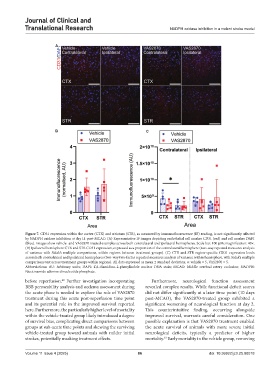
            Figure 7. CD31 expression within the cortex (CTX) and striatum (STR), as measured by immunofluorescence (IF) reading, is not significantly affected
            by NADPH oxidase inhibition at day 11 post-MCAO. (A) Representative IF images depicting endothelial cell marker CD31 (red) and cell marker DAPI
            (blue). Images show vehicle- and VAS2870-treated examples across both contralateral and ipsilateral hemispheres. Scale bar: 100 µM; magnification: 40×.
            (B) Ipsilateral hemisphere CTX and STR CD31 expression, expressed as a proportion of the contralateral hemisphere (two-way repeated measures analysis
            of variance with Sidak’s multiple comparisons, within regions between treatment groups). (C) CTX and STR region-specific CD31 expression levels
            across both contralateral and ipsilateral hemispheres (two-way two-factor repeated measures analysis of variance within hemisphere, with Sidak’s multiple
            comparisons test across treatment groups within regions). All data expressed as mean ± standard deviation; n: vehicle = 5, VAS2870 = 5.
            Abbreviations: AU: Arbitrary units; DAPI: 4’,6-diamidino-2-phenylindole nuclear DNA stain; MCAO: Middle cerebral artery occlusion; NADPH:
            Nicotinamide adenine dinucleotide phosphate.
                           48
            before reperfusion.  Further investigation incorporating   Furthermore, neurological function assessment
            BBB permeability analysis and oedema assessment during   revealed complex results. While functional deficit scores
            the acute phase is needed to explore the role of VAS2870   did not differ significantly at a later time point (10 days
            treatment during this acute post-reperfusion time point   post-MCAO),  the  VAS2870-treated  group  exhibited  a
            and its  potential  role in  the  improved  survival  reported   significant worsening of neurological function at day 2.
            here. Furthermore, the particularly higher level of mortality   This counterintuitive finding, occurring alongside
            within the vehicle-treated group likely introduced a degree   improved survival, warrants careful consideration. One
            of survival bias, complicating direct comparisons between   possible explanation is that VAS2870 treatment enabled
            groups at sub-acute time points and skewing the surviving   the acute survival of animals with more severe initial
            vehicle-treated group toward animals with milder initial   neurological deficits, typically a predictor of higher
            strokes, potentially masking treatment effects.    mortality.  Early mortality in the vehicle group, removing
                                                                       61

            Volume 11 Issue 4 (2025)                        86                            doi: 10.36922/jctr.25.00018

