


Page 115 - JCTR-11-5
P. 115
Journal of Clinical and
            Translational Research                                       Predicting coordinator workload with adapted OPAL


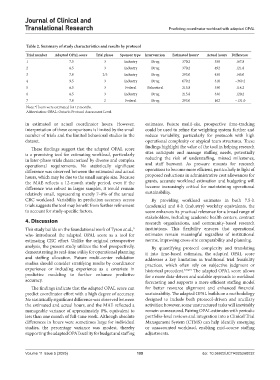
            Table 2. Summary of study characteristics and results by protocol
            Trial number  Adapted OPAL score  Trial phase  Sponsor type  Intervention  Estimated hours a  Actual hours  Difference
            1                 7.5            3        Industry   Drug          370.2        538      167.8
            2                 6.5            3        Industry   Drug          370.2        492      121.8
            3                 7.0            2/3      Industry   Drug          293.0        438      145.0
            4                 9.5            3        Industry   Drug          679.2        310      −369.2
            5                 6.5            3        Federal   Behavioral     215.8        330      114.2
            6                 6.5            3        Industry   Drug          215.8        336      120.2
            7                 7.0            2        Federal    Drug          293.0        162      −131.0
            Note:  Hours were estimated for 12 months.
                a
            Abbreviation: OPAL: Ontario Protocol Assessment Level.
            in estimated or actual coordinator hours. However,   estimates. Future multi-site, prospective time-tracking
            interpretation of these comparisons is limited by the small   could be used to refine the weighting system further and
            number of trials and the limited behavioral studies in the   reduce  variability, particularly  for protocols  with  high
            dataset.                                           operational complexity or atypical team structures. These
              These findings suggest that the adapted OPAL score   findings highlight the value of the tool in helping research
            is a promising tool for estimating workload, particularly   sites anticipate and manage staffing needs, potentially
            in later-phase trials characterized by diverse and complex   reducing the risk of understaffing, missed milestones,
            operational requirements. No statistically significant   and staff burnout.  As pressure mounts  for research
            difference was observed between the estimated and actual   operations to become more efficient, particularly in light of
            hours, which may be due to the small sample size. Because   proposed reductions in administrative cost allowances for
            the MAE reflects a  12-month study period, even  if the   grants, accurate workload estimation and budgeting will
            difference was robust in larger samples, it would remain   become increasingly critical for maintaining operational
            relatively small, representing merely 7–8% of the annual   sustainability.
            CRC workload. Variability in prediction accuracy across   By providing workload estimates in both 7.5-h
            trials suggests the tool may benefit from further refinement   (academic) and 8-h (industry) workday equivalents, the
            to account for study-specific factors.             score enhances its practical relevance for a broad range of
                                                               stakeholders, including academic health centers, contract
            4. Discussion                                      research organizations, and community-based research
            This study builds on the foundational work of Tyson et al.,    institutions. This flexibility ensures that operational
                                                          9
            who introduced the adapted OPAL score as a tool for   estimates remain meaningful regardless of institutional
            estimating CRC effort. Unlike the original retrospective   norms, improving cross-site comparability and planning.
            analysis, the present study utilizes the tool prospectively,   By quantifying protocol complexity and translating
            demonstrating its real-time utility for operational planning   it into time-based estimates,  the adapted OPAL score
            and staffing allocation. Future multi-center validation   addresses a key limitation in traditional trial feasibility
            studies should consider stratifying results by coordinator   practices, which often rely on subjective judgment or
            experience or including experience as a covariate in   historical precedent. 7,18,19  The adapted OPAL score allows
            predictive modeling to further enhance predictive   for a more data-driven and scalable approach to workload
            accuracy.                                          forecasting and supports a more efficient staffing model
              The findings indicate that the adapted OPAL score can   for better resource alignment and enhanced financial
            predict coordinator effort with a high degree of accuracy.   sustainability. The adapted OPAL builds on a methodology
            No statistically significant difference was observed between   designed to include both protocol-driven and ancillary
            the estimated and actual hours, and the MAE reflected a   activities; however, some unstructured tasks will inevitably
            manageable variance of approximately 8%, equivalent to   remain unmeasured. Pairing OPAL estimates with periodic
            less than one month of full-time work. Although absolute   portfolio-level reviews and integration into a Clinical Trial
            differences in hours were sometimes large for individual   Management System (CTMS) can help identify emerging
            studies, the percentage variance was modest, thereby   or unaccounted workload, enabling mid-course staffing
            supporting the adapted OPAL’s utility for budget and staffing   adjustments.


            Volume 11 Issue 5 (2025)                       109                         doi: 10.36922/JCTR025260032

