


Page 62 - JCTR-11-5
P. 62
Journal of Clinical and
            Translational Research                                          Metabolism of healthy and leukemic stem cells


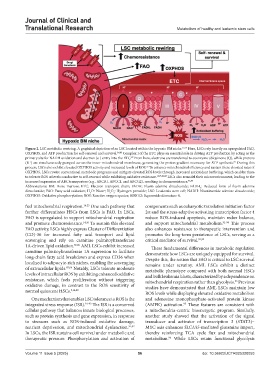
            Figure 2. LSC metabolic rewiring. A graphical depiction of an LSC located within the hypoxic BM niche. 13,14  Here, LSCs rely heavily on upregulated FAO,
            OXPHOS, and ATP production for self-renewal and survival. 84,85  Complex I of the ETC plays an essential role in driving ATP production by acting as the
            primary site for NADH oxidation and electron (e ) entry into the ETC.  From here, electrons are transferred to coenzyme ubiquinone (Q), while protons
                                                         87
                                           −
            (H ) are simultaneously pumped across the inner mitochondrial membrane, generating the proton gradient necessary for ATP synthesis.  During this
              +
                                                                                                    87
            process, LSCs also exhibit elevated OXPHOS activity and increased levels of ROS.  To enhance mitochondrial efficiency and sustain these elevated rates of
                                                               25
            OXPHOS, LSCs rewire conventional metabolic programs and mitigate elevated ROS levels through increased antioxidant buffering, which enables them
            to tolerate ROS at levels conductive to self-renewal while exhibiting oxidative resistance. 14,75,83,88  LSCs also remodel their microenvironment, leading to the
            increased expression of ABC transporters (e.g., ABCB1, ABCC1, and ABCG2), resulting in chemoresistance. 85,86
            Abbreviations: BM: Bone marrow; ETC: Electron transport chain; FADH: Flavin adenine dinucleotide; FADH : Reduced form of flavin adenine
                                                                                      2
            dinucleotide; FAO: Fatty acid oxidation; H O: Water; H O : Hydrogen peroxide; LSC: Leukemia stem cell; NADH: Nicotinamide adenine dinucleotide;
                                                 2
                                                2
                                       2
            OXPHOS: Oxidative phosphorylation; ROS: Reactive oxygen species; SOD1/2: Superoxide dismutase ½.
            fuel mitochondrial respiration. 14,25  One such pathway that   components such as eukaryotic translation initiation factor
            further differentiates HSCs from LSCs is FAO. In LSCs,   2α and the stress-adaptive activating transcription factor 4
            FAO is upregulated to support mitochondrial respiration   reduce ROS-induced apoptosis, maintain redox balance,
            and promote chemoresistance. 14,26  To sustain this elevated   and support mitochondrial metabolism. 92-94  This process
            FAO activity, LSCs highly express Cluster of Differentiation   also enhances resistance to therapeutic intervention and
            (CD)-36 for increased fatty acid transport and lipid   promotes the long-term persistence of LSCs, serving as a
            scavenging  and  rely  on  carnitine  palmitoyltransferase   critical mediator of survival. 92,93
            1A-driven lipid oxidation. 85,86  AML LSCs exhibit increased   These fundamental differences in metabolic regulation
            carnitine  palmitoyltransferase  1A  expression  to  facilitate   demonstrate how LSCs are uniquely equipped for survival.
            long-chain fatty acid breakdown and express CD36 when   Despite this, the notion that FAO is critical to LSC survival
            localized to adipocyte-rich niches, enabling the scavenging   remains  under  scrutiny.  AML  LSCs  exhibit  a  distinct
            of extracellular lipids. 85,86  Notably, LSCs tolerate moderate   metabolic phenotype compared with both normal HSCs
            levels of intracellular ROS by exhibiting enhanced oxidative   and bulk leukemia blasts, characterized by a dependence on
            resistance, which fuels proliferation without triggering   mitochondrial respiration rather than glycolysis.  Previous
                                                                                                     95
            oxidative damage, in contrast to the ROS sensitivity of   studies have demonstrated that AML LSCs maintain low
            normal quiescent HSCs. 5,14,88                     ROS levels while displaying elevated oxidative metabolism
              One mechanism that enables LSC tolerance to ROS is the   and adenosine monophosphate-activated protein kinase
            integrated stress response (ISR). 91-93  The ISR is a conserved   (AMPK) activation.  These features are consistent with
                                                                               95
            cellular pathway that balances innate biological processes,   a mitochondria-centric bioenergetic program. Similarly,
            such as protein synthesis and gene expression, in response   another study showed that the activation of the signal
            to stressors such as ROS-induced oxidative damage,   transducer and activator of transcription 3 (STAT3)–
            nutrient deprivation, and mitochondrial dysfunction. 91,92    MYC axis enhances SLC1A5-mediated glutamine import,
            In LSCs, the ISR sustains cell survival under metabolic and   thereby reinforcing TCA cycle flux and mitochondrial
            therapeutic pressure. Phosphorylation and activation of   metabolism.  While LSCs retain functional glycolysis
                                                                         96

            Volume 11 Issue 5 (2025)                        56                         doi: 10.36922/JCTR025320053

