


Page 65 - JCTR-11-5
P. 65
Journal of Clinical and
            Translational Research                                          Metabolism of healthy and leukemic stem cells


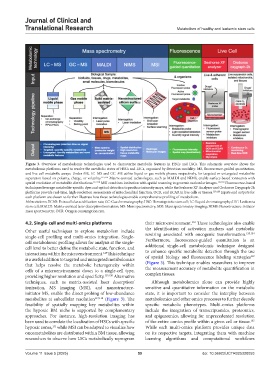
            Figure  3.  Overview of metabolomic technologies used to characterize metabolic features in HSCs and LSCs.  This  schematic overview shows the
            metabolomic platforms used to resolve the metabolic states of HSCs and LSCs, organized by detection modality: MS, fluorescence-guided quantitation,
            and live-cell metabolic assays. Under MS, LC–MS and GC–MS utilize liquid or gas mobile phases, respectively, for targeted or untargeted metabolite
            separation based on polarity, charge, or volatility. 115,116  Matrix-assisted technologies, such as MALDI and NIMS, enable surface-based ionization with
            spatial resolution of metabolite distributions. 117,118  MSI combines ionization with spatial scanning to generate molecular images. 117,118  Fluorescence-based
            techniques leverage metabolite-specific dyes and optical detection to produce intensity maps, while the Seahorse XF Analyzer and Oroboros Oxygraph-2k
            platforms provide real-time, high-resolution assessments of mitochondrial function, OCR, and ECAR in live cells or tissues. 119,120  Inputs and outputs for
            each platform are shown to further illustrate how these technologies enable comprehensive profiling of metabolism.
            Abbreviations: ECAR: Extracellular acidification rate; GC: Gas chromatography; HSC: Hematopoietic stem cell; LC: Liquid chromatography; LSC: Leukemia
            stem cell; MALDI: Matrix-assisted laser desorption/ionization; MS: Mass spectrometry; MSI: Mass spectrometry imaging; NIMS: Nanostructure-initiator
            mass spectrometry; OCR: Oxygen consumption rate.

                                                                                   132
            4.2. Single-cell and multi-omics platforms         their microenvironment.  These technologies also enable
                                                               the identification of activation markers and metabolic
            Other  useful techniques to explore metabolism include                                        133,134
            single-cell profiling and multi-omics integration. Single-  rewiring  associated  with  oncogenic  transformation.
            cell metabolomic profiling allows for analysis at the single-  Furthermore, fluorescence-guided quantitation is an
            cell level to better define the metabolic state, function, and   additional single-cell metabolomic technique designed
                                             128
            interactions within the microenvironment.  This technique   to enhance specific metabolite detection through the use
                                                               of spatial biology and fluorescence labeling strategies
                                                                                                            119
            is a useful addition to targeted and untargeted metabolomics   (Figure 3). This technique enables researchers to improve
            that helps resolve the metabolic heterogeneity within   the measurement accuracy of metabolite quantification in
            cells of a microenvironment down to a single-cell type,   complex tissues.
            providing higher resolution and specificity. 129,130  Alternative
            techniques, such as matrix-assisted laser desorption/  Although  metabolomics  alone  can  provide  highly
            ionization, MS imaging (MSI), and nanostructure-   sensitive and quantitative information on the metabolic
            initiator MS, enable the direct probing of low-abundance   state, it is important to consider the interplay between
            metabolites at subcellular resolution 117,118  (Figure  3). The   metabolomics and other omics processes to further decode
            feasibility of spatially mapping key metabolites within   specific metabolic phenotypes. Multi-omics platforms
            the hypoxic BM niche is supported by complementary   include the integration of transcriptomics, proteomics,
            approaches. For instance, high-resolution imaging has   and epigenomics, allowing for unprecedented resolution
            been used to correlate the localization of HSCs with specific   of the entire -omics profile within a given cell or tissue.
                                                                                                            135
            hypoxic zones,  while MSI can be adapted to visualize how   While each multi-omics platform provides unique data
                       131
            oncometabolites are distributed within BM tissue, allowing   on  its  respective  targets,  integrating  them  with  machine
            researchers to observe how LSCs metabolically reprogram   learning algorithms and computational workflows

            Volume 11 Issue 5 (2025)                        59                         doi: 10.36922/JCTR025320053

