


Page 49 - JCTR-9-5
P. 49
Iyngkaran et al. | Journal of Clinical and Translational Research 2023; 9(5): 347-356   351


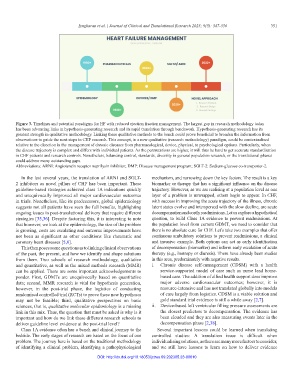
        Figure 3. Timelines and potential paradigms for HF with reduced ejection fraction management. The largest gap in research methodology today
        has been advancing links in hypothesis-generating research and its rapid translation through benchwork. Hypothesis-generating research has its
        greatest strength in qualitative methodology. Linking these qualitative methods to the bench could prove beneficial to broaden the information from
        observations to guide the next steps in CHF research. This concept, in a new qualitative (research methodology) paradigm, could be contextualised
        relative to the direction in the management of chronic diseases from pharmacological, device, physical, to psychological options. Particularly, when
        the disease trajectory is complex and differs with individual patients. As the permutations are higher, it will thus be hard to get accurate standardisation
        in CHF patients and research controls. Nonetheless, balancing control, standards, diversity in general population research, or the translational phases
        could address many outstanding gaps.
        Abbreviations: ARNI: Angiotensin receptor neprilysin inhibitor; DMP: Disease management program; SGLT-2: Sodium-glucose co-transporter-2.

          In the last several years, the translation of ARNI and SGLT-  mechanism, and narrowing down the key factors. The result is a key
        2 inhibitors as novel pillars of CHF has been important. These   biomarker or therapy that has a significant influence on the disease
        guideline-based strategies achieved class 1A indications quickly   trajectory. However, as we are realising at a population level as one
        and unequivocally improved all major cardiovascular outcomes   layer of a problem is unwrapped, others begin to appear. In CHF,
        in trials. Nonetheless, like its predecessors, global epidemiology   with success in improving the acute trajectory of the illness, chronic
        suggests not all patients have seen the full benefits, highlighting   latent states evolve and interspersed with the slow decline, are acute
        ongoing issues in post-translational delivery that require different   decompensation and costly readmissions. Let us explore a hypothetical
        strategies [35,36]. Despite factoring this, it is interesting to note   question, to build Class  1A evidence to prevent readmissions. At
        that however, we look at the epidemiology, the size of the problem   the population level from current GDMT, we need to consider that
        is growing, costs are escalating and outcome improvements have   there is no absolute cure for CHF. Let’s take two examples that offer
        not  been  as  significant  as  other  conditions  like  rheumatic  and   continuous ambulatory solutions to prevent readmissions, a clinical
        coronary heart diseases [5,6].                          and invasive example. Both options can act as early identification
          This then poses some questions as to linking clinical observations   of decompensation (biomarker) and inform early escalation of acute
        of the past, the present, and how we identify and shape solutions   therapy (e.g., inotropy or diuresis). There have already been studies
        from them.  Two schools of research  methodology, qualitative   in this area, predominately with negative results.
        and quantitative, as well as the mixed methods research (MMR)   i.   Chronic disease self-management  (CDSM) with a health
        can be applied. There are some important acknowledgements to   service-supported model of care such as nurse lead home-
        ponder. First, GDMTs are unequivocally  based on quantitative   based care. The addition of allied health support does improve
        data; second, MMR research is vital for hypothesis generation,   major  adverse  cardiovascular  outcomes;  however, it  is
        however, in the post-trial phase, the logistics of conducting   resource-intensive and has not translated globally into models
        randomised controlled trial (RCTs) to prove these new hypotheses   of care largely from logistics. CDSM is a viable solution and
        may not be feasible;  third, qualitative  perspectives  on basic   gold standard trial evidence is still a while away [2,7].
        sciences, that is, qualitative molecular epidemiology is a missing   ii.  Device-based left ventricular filling pressure assessments are
        link in this mix. Thus, the question that must be asked is why is it   the closest predictors to decompensation. The evidence has
        important and how do we link these different research schools to   been clouded and they are also measuring events later in the
        deliver guideline level evidence at the post-trial level?   decompensation phase [2,38].
          Class 1A evidence often has a bench and clinical journey to the   Several important lessons could be learned when translating
        bedside. The early stages of research are based on the focus of one   controlled  studies:  A  translation  issue  is  difficult  when
        problem. The journey here is based on the traditional methodology   individualising solutions, as there are many more factors to consider,
        of identifying a clinical problem, identifying a pathophysiological   and we still  have lessons to learn on how to deliver  evidence
                                          DOI: http://dx.doi.org/10.18053/jctres.09.202305.23-00010

