


Page 90 - MI-1-2
P. 90
Microbes & Immunity                                     Identifying hydrogenase orthologs in the human proteome


            identify regions of similarity between complex I subunits   A             B
            and [NiFe] hydrogenases. 35
            2.3. Clustal Ω

            Prokaryotic sequences displaying similarities with the
            human proteins NDUFS2 and NDUFS7 were then aligned
            and analyzed using the Clustal Ω program. 36

            2.4. ScanProsite                                    C                     D
            Using selected motifs of interest, an analysis was performed
            with ScanProsite to identify predicted sites of post-
            translational modifications, including N-glycosylation,
            N-myristoylation, and phosphorylation, known to support
            pro-oxidative and proinflammatory signaling pathways.
            This investigation focused on pinpointing redox-sensitive
            sites that could potentially facilitate H₂-driven antioxidant
            and anti-inflammatory signaling activity. 37
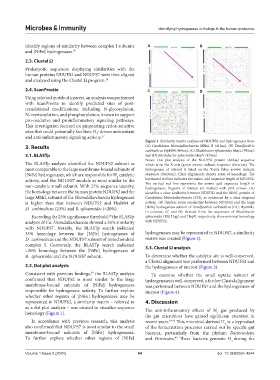
                                                               Figure 1. Similarity matrix analyses of NDUFS2 and hydrogenases from
            3. Results                                         (A)  Candidatus  Heimdallarchaeota MbhL B (418aa), (B)  Desulfovibrio
                                                               carbinolicus Hyd494 (494aa), (C) Rhodobacter sphaeroides HupL (596aa),
            3.1. BLASTp                                        and (D) Rhodobacter sphaeroides HupV (475aa)
                                                               Notes: Dot plot analysis of the NDUFS2 protein (463aa) sequence
            The BLASTp analysis  identified the NDUFS2 subunit as   which is on the X-axis (green arrows indicate sequence direction). The
            most comparable to the large membrane-bound subunits of   hydrogenase of interest is listed on the Y-axis (blue arrows indicate
            [NiFe] hydrogenases, which are responsible for H  catalytic   sequence direction). Clear alignments denote areas of homology. The
                                                   2
            activity, and the NDUFS7 module as most similar to the   horizontal red line indicates the amino acid sequence length of NDUFS2.
                                                               The vertical red line represents the amino acid sequence length of
            non-catalytic small subunit. With 27% sequence identity,   hydrogenases. Regions of interest are marked with pink arrows. (A)
            the homology between the human protein NDUFS2 and the   identifies a close similarity between NDUFS2 and the MbhL protein of
            large MbhL subunit of Ca. Heimdallarchaeota hydrogenase   Candidatus Heimdallarchaeota  (CH), as evidenced by a clear diagonal
            is higher than that between NDUFS2 and Hyd494 of   pattern. (B) displays some similarities between NDUFS2 and the large
            D.  carbinolicus (23%) and R. sphaeroides (<20%).  [NiFe] hydrogenase subunit of Desulfovibrio carbinolicus (DC; Hyd494).
                                                               In contrast, (C and D), derived from the sequences of  Rhodobacter
              Exceeding the 25% significance threshold,  the BLASTp   sphaeroides (RS) HupL and HupV, respectively, show minimal homology
                                               38
            analysis of Ca. Heimdallarchaeota showed a 35% similarity   with NDUFS2.
            with NDUFS7. Notably, the BLASTp search indicated
            35% homology between the [NiFe] hydrogenases of    hydrogenases may be represented in NDUFS7, a similarity
            D.  carbinolicus and the NDUFS7 subunit of mitochondrial   matrix was created (Figure 2).
            complex I. Conversely, the BLASTp search indicated   3.3. Clustal Ω analysis
            <20% homology between the [NiFe] hydrogenases of
            R.  sphaeroides and the NDUFS7 subunit.            To determine whether the catalytic site is well-conserved,
                                                               a Clustal alignment was performed between NDUFS2 and
            3.2. Dot plot analysis                             the hydrogenases of interest (Figure 3).
            Consistent with previous findings,  the BLASTp analysis   To examine whether the small uptake subunit of
                                        29
            confirmed that  NDUFS2  is  most  similar  to  the large   hydrogenases is well-conserved, a further Clustal alignment
            membrane-bound subunits of [NiFe] hydrogenases     was performed between NDUFS7 and the hydrogenases of
            responsible for hydrogenase activity. To further explore   interest (Figure 4).
            whether other regions of [NiFe] hydrogenases may be
            represented in NDUFS2, a similarity matrix – referred to   4. Discussion
            as a dot plot analysis – was created to visualize sequence   The anti-inflammatory effects of H  gas produced by
            homology (Figure 1).                                                             2
                                                               the gut microbiota have gained significant attention in
              In accordance with previous research, this analysis   recent years. 39-42  This microbial-derived H  is a byproduct
                                                                                                 2
            also confirmed that NDUFS7 is most similar to the small   of the fermentation processes carried out by specific gut
            membrane-bound subunits of [NiFe] hydrogenases.    bacteria, particularly from the phylum  Bacteriodetes
            To further explore whether other regions of [NiFe]   and Firmicutes.  These bacteria generate H during the
                                                                           43
                                                                                                   2
            Volume 1 Issue 2 (2024)                         84                               doi: 10.36922/mi.4544

