


Page 91 - MI-1-2
P. 91
Microbes & Immunity                                     Identifying hydrogenase orthologs in the human proteome


            anaerobic metabolism of dietary fibers that are indigestible   methanogenic archaea, sulfate-reducing bacteria, and
            by the human body. H produced by commensal bacteria   acetogenic bacteria, which employ H  as an electron donor
                              2
                                                                                            2
            can be utilized by other microbial populations, particularly   in their respective metabolic pathways.  This symbiotic
                                                                                                8
                                                               relationship between H producers and consumers helps
                                                                                  2
             A                     B                           maintain a balanced intestinal environment. Imbalances,
                                                               such as an overproduction of H , can lead to gastrointestinal
                                                                                       2
                                                               disturbances  like small intestine  bacterial  overgrowth.
                                                                                                            44
                                                               In  contrast, insufficient H  utilization,  which  is a  more
                                                                                     2
                                                               common occurrence, may impair microbial metabolic
                                                               efficiency, leading to an increase in ROS and subsequent
                                                               inflammation.
             C                     D                             The gut microbiome is well established as a modulator
                                                               of systemic inflammation through various mechanisms,
                                                                                                            45
                                                               including  the  regulation  of  immune  cell  activity,
                                                               cytokine production,  and the maintenance of intestinal
                                                                                46
                                                               epithelial  integrity.   A  healthy  microbiome,  enriched  in
                                                                              47
                                                               H -utilizing microbes, is critical for preventing leaky gut
                                                                2
                                                               syndrome, which can lead to systemic inflammation by
                                                               allowing bacterial endotoxins to enter the bloodstream.
                                                                                                            48
                                                               Furthermore, microbial-produced H  has been shown to
                                                                                             2
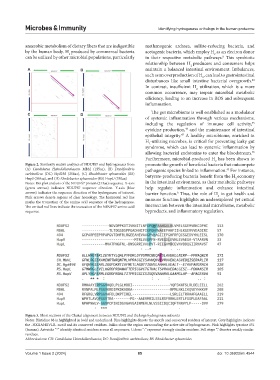
            Figure 2. Similarity matrix analyses of NDUFS7 and hydrogenases from   promote the growth of beneficial bacteria that outcompete
            (A)  Candidatus  Heimdallarchaeota  MbhJ (155aa), (B)  Desulfovibrio   pathogenic species linked to inflammation.  For instance,
                                                                                                 43
            carbinolicus  (DC)  Hyd258  (258aa),  (C)  Rhodobacter  sphaeroides  (RS)   butyrate-producing bacteria benefit from the H economy
            HupS (369aa), and (D) Rhodobacter sphaeroides (RS) HupU (330aa)                          2
            Notes: Dot plot analysis of the NDUFS7 protein (213aa) sequence. X-axis   in the intestinal environment, as their metabolic pathways
            (green arrows) indicates NDUFS7 sequence direction. Y-axis (blue   help  regulate  inflammation  and  enhance  intestinal
            arrows) indicates the sequence direction of the hydrogenase of interest.   barrier function.  Thus, the role of H  in gut health and
                                                                            8
                                                                                              2
            Pink arrows denote regions of clear homology. The horizontal red line   immune function highlights an underexplored yet critical
            marks the truncation of the amino acid sequence of the hydrogenase.
            The vertical red lines indicate the truncation of the NDUFS7 amino acid   intersection between the intestinal microbiome, metabolic
            sequence.                                          byproducts, and inflammatory regulation.


            Figure 3. Short sections of the Clustal alignment between NDUFS2 and the large hydrogenase subunits
            Notes: Histidine 88 is highlighted in bold and underlined. Blue highlights denote the motifs and conserved residues of interest. Grey highlights indicate
            the -HXXAHXVLR- motif and its conserved residues. Italics show the region surrounding the active site of hydrogenases. Pink highlights tyrosine 151
            (human). Asterisks “*” identify identical residues across all sequences. Colons “:” represent strongly similar residues. Full stops “.” denotes weakly similar
            residues.
            Abbreviations: CH: Candidatus Heimdallarchaeota; DC: Desulfovibrio carbinolicus; RS: Rhodobacter sphaeroides.


            Volume 1 Issue 2 (2024)                         85                               doi: 10.36922/mi.4544

