


Page 130 - MI-2-2
P. 130
Microbes & Immunity                                              Anemia among COVID-19 patients in Ethiopia


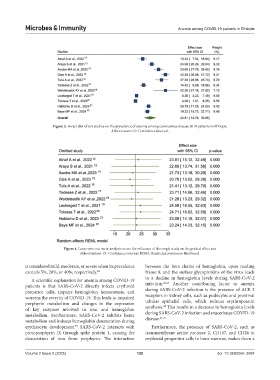
                       Figure 3. Forest plot of ten studies on the prevalence of anemia among coronavirus disease 2019 patients in Ethiopia
                                                Abbreviation: CI: Confidence interval.


                            Figure 4. Leave-one-out meta-analysis to see the influence of the single study on the pooled effect size
                                   Abbreviations: CI: Confidence interval; REML: Restricted maximum likelihood.

            is considered mild, moderate, or severe when its prevalence   between the beta chains of hemoglobin, open reading
            exceeds 5%, 20%, or 40%, respectively. 24          frame 8, and the surface glycoproteins of the virus leads
              A scientific explanation for anemia among COVID-19   to a decline in hemoglobin levels during SARS-CoV-2
            patients is that SARS-CoV-2 directly infects erythroid   infection. 26,27  Another contributing factor to anemia
            precursor  cells,  impairs  hemoglobin  homeostasis,  and   during  SARS-CoV-2 infection  is the  presence  of  ACE  2
            worsens the severity of COVID-19. This leads to impaired   receptors in kidney cells, such as podocytes and proximal
            porphyrin metabolism  and  changes  in the  expression   tubular epithelial cells, which reduces erythropoietin
                                                                       28
            of key enzymes involved in iron and hemoglobin     synthesis.  This results in a decrease in hemoglobin levels
            metabolism. Furthermore, SARS-CoV-2 inhibits heme   during SARS-CoV-2 infection and exacerbates COVID-19
                                                                     25-27
            metabolism and induces hemoglobin denaturation during   disease.
            erythrocyte development.  SARS-CoV-2 interacts with   Furthermore, the  presence of SARS-CoV-2, such as
                                 25
            protoporphyrin IX through spike protein 1, causing the   transmembrane serine protease 2, CD147, and CD26 in
            dissociation of iron from porphyrin. The interaction   erythroid progenitor cells in bone marrow, makes them a


            Volume 2 Issue 2 (2025)                        122                               doi: 10.36922/mi.3504

