


Page 129 - MI-2-2
P. 129
Microbes & Immunity                                              Anemia among COVID-19 patients in Ethiopia


            Table 1. Characteristics of the included studies in systematic review and meta‑analysis
            References  Study year    Study design      Sample size       Study area        Cases  Prevalence (%)
            12           2020   Prospective cohort         136    Amhara                     18       13.24
            13           2020   Prospective cross-sectional  334  Addis Ababa                83       24.9
            14           2022   Retrospective cross-sectional  253  Amhara                   85       33.6
            15           2021   Comparative cross-sectional  319  Addis Ababa                135      42.3
            16           2022   Retrospective cohort       126    Addis Ababa                47       37.3
            17           2021   Retrospective cross-sectional  240  Addis Ababa              37       14.42
            18           2021   Prospective cohort         40     Addis Ababa                17       42.5
            19           2020   Retrospective cohort       429    Addis Ababa                23       5.36
            20           2022   Retrospective cohort       318    Oromia                     13       4.08
            21           2021   Retrospective cohort       452    Amhara                     94       20.79
            22           2022   Multicenter retrospective cohort  489  Amhara, Oromia, and Addis Ababa  94  19.22

                                                               Table 2. Meta‑regression of selected variables affecting
                                                               the prevalence of anemia among COVID‑19 patients in
                                                               Ethiopia: systematic review and meta‑analysis

                                                               Source of       Coefficients  Standard   P‑value
                                                               heterogenicity                error
                                                               Study period      23.42       609.38     0.970
                                                               Study design      23.87        4.33      0.000
                                                               Study area        23.57        4.18      0.000


                                                               were found to be a source of heterogenicity in which the
                                                               P-value was below 0.05 (Table 2).

                                                               3.6. Sensitivity analysis
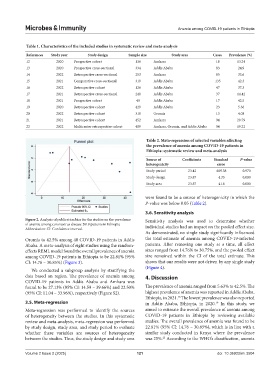
            Figure 2. Analysis of publication bias for the studies on the prevalence   Sensitivity analysis was used to determine whether
            of anemia among coronavirus disease 2019 patients in Ethiopia   individual studies had an impact on the pooled effect size.
            Abbreviation: CI: Confidence interval.
                                                               As demonstrated, no single study significantly influenced
            Oromia to 42.5% among 40 COVID-19 patients in Addis   the total estimate of anemia among COVID-19-infected
            Ababa. A meta-analysis of eight studies using the random-  patients. After removing one study at a time, all effect
            effects REML model found the overall prevalence of anemia   sizes ranged from 14.76% to 30.75%, and the pooled effect
            among COVID-19 patients in Ethiopia to be 22.81% (95%   size remained within the CI of the total estimate. This
            CI: 14.76 – 30.85%) (Figure 3).                    shows that our results were not driven by any single study
                                                               (Figure 4).
              We conducted a subgroup analysis by stratifying the
            data based on region. The prevalence of anemia among   4. Discussion
            COVID-19  patients  in Addis Ababa and Amhara was
            found to be 27.13% (95% CI: 14.59 – 39.66%) and 22.50%   The prevalence of anemia ranged from 5.63% to 42.5%. The
            (95% CI: 11.04 – 33.96%), respectively (Figure S2).  highest prevalence of anemia was reported in Addis Ababa,
                                                               Ethiopia, in 2021.  The lowest prevalence was also reported
                                                                             18
            3.5. Meta-regression                               in Addis Ababa, Ethiopia, in 2020.  In this study, we
                                                                                             19
            Meta-regression was performed to identify the sources   aimed to estimate the overall prevalence of anemia among
            of heterogeneity between the studies. In this systematic   COVID-19  patients in  Ethiopia  by reviewing available
            review and meta-analysis, meta-regression was performed   studies. The overall prevalence of anemia was found to be
            by study design, study area, and study period to evaluate   22.81% (95% CI: 14.76 – 30.85%), which is in line with a
            whether these variables are sources of heterogeneity   similar study conducted in Kenya where the prevalence
            between the studies. Thus, the study design and study area   was 25%.  According to the WHO’s classification, anemia
                                                                      23

            Volume 2 Issue 2 (2025)                        121                               doi: 10.36922/mi.3504

