


Page 44 - MI-2-2
P. 44
Microbes & Immunity                                                                Probiotics & obesity


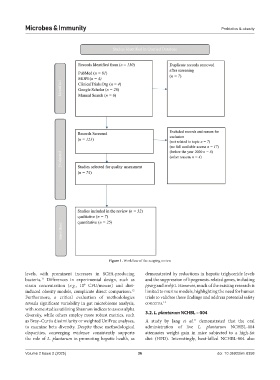
                                               Figure 1. Workflow of the scoping review

            levels, with prominent increases in SCFA-producing   demonstrated by reductions in hepatic triglyceride levels
                   11
            bacteria.  Differences in experimental design, such as   and the suppression of lipogenesis-related genes, including
            strain concentration (e.g., 10  CFU/mouse) and diet-  pparg and srebp1. However, much of the existing research is
                                     9
                                                         12
            induced obesity models, complicate direct comparison.    limited to murine models, highlighting the need for human
            Furthermore, a critical evaluation of methodologies   trials to validate these findings and address potential safety
            reveals significant variability in gut microbiome analysis,   concerns. 11
            with some studies utilizing Shannon indices to assess alpha
            diversity, while others employ more robust metrics, such   3.2. L. plantarum NCHBL – 004
            as Bray–Curtis dissimilarity or weighted UniFrac analyses,   A study by Jang  et al.  demonstrated that the oral
                                                                                   11
            to examine beta diversity. Despite these methodological   administration of live  L. plantarum NCHBL-004
            disparities, converging evidence consistently supports   attenuates weight gain in mice subjected to a high-fat
            the role of L. plantarum in promoting hepatic health, as   diet (HFD). Interestingly, heat-killed NCHBL-004 also


            Volume 2 Issue 2 (2025)                         36                               doi: 10.36922/mi.8358

