


Page 28 - MI-2-3
P. 28
Microbes & Immunity                                                    Correlation between VZV and cancer


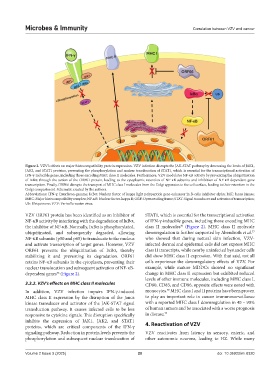
            Figure 2. VZV’s effects on major histocompatibility protein expression. VZV infection disrupts the JAK-STAT pathway by decreasing the levels of JAK1,
            JAK2, and STAT1 proteins, preventing the phosphorylation and nuclear translocation of STAT1, which is essential for the transcriptional activation of
            IFN-γ-inducible genes, including those encoding MHC class II molecules. Furthermore, VZV modulates NF-κB activity by preventing the ubiquitination
            of IκBα through the action of the ORF61 protein, leading to the cytoplasmic retention of NF-κB subunits and inhibition of NF-κB-dependent gene
            transcription. Finally, ORF66 disrupts the transport of MHC class I molecules from the Golgi apparatus to the cell surface, leading to their retention in the
            Golgi compartment. Schematic created by the authors.
            Abbreviations: IFN-γ: Interferon-gamma; IκBα: Nuclear factor of kappa light polypeptide gene enhancer in B-cells inhibitor alpha; JAK: Janus kinase;
            MHC: Major histocompatibility complex; NF-κB: Nuclear factor-kappa B; ORF: Open reading frame; STAT: Signal transducer and activator of transcription;
            Ub: Ubiquinone; VZV: Varicella-zoster virus.

            VZV ORF61 protein has been identified as an inhibitor of   STAT1, which is essential for the transcriptional activation
            NF-κB activity by interfering with the degradation of IκBα,   of IFN-γ-inducible genes, including those encoding MHC
            the inhibitor of NF-κB. Normally, IκBα is phosphorylated,   class  II molecules  (Figure  2). MHC class  II molecule
                                                                              30
                                                                                                            77
            ubiquitinated, and subsequently degraded, allowing   downregulation is further supported by Abendroth et al.
            NF-κB subunits (p50 and p65) to translocate to the nucleus   who showed that during natural skin infection, VZV-
            and activate transcription of target genes. However, VZV   infected dermal and epidermal cells did not express MHC
            ORF61 prevents the ubiquitination of IκBα, thereby   class II transcripts, while nearby uninfected bystander cells
            stabilizing it and preventing its degradation. ORF61   did show MHC class II expression. With that said, not all
            retains NF-κB subunits in the cytoplasm, preventing their   cells  experience  the  downregulatory  effects  of  VZV.  For
            nuclear translocation and subsequent activation of NF-κB-  example, while mature MDDCs showed no significant
            dependent genes  (Figure 2).                       change in MHC class II expression but exhibited reduced
                         76
                                                               levels of other immune molecules, including MHC class I,
            3.3.2. VZV’s effects on MHC class II molecules     CD80, CD83, and CD86, opposite effects were noted with
                                                                        78
            In addition, VZV infection impairs IFN-γ-induced   monocytes.  MHC class I and II proteins have been proven
            MHC class  II expression by the disruption of the Janus   to play an important role in cancer immunosurveillance
            kinase transducer and activator of the JAK-STAT signal   with a reported MHC class I downregulation in 40 – 90%
            transduction pathway. It causes infected cells to be less   of human tumors and be associated with a worse prognosis
            responsive to cytokine signals. This disruption specifically   in disease. 79
            inhibits the expression of JAK1, JAK2, and STAT1
            proteins, which are critical components of the IFN-γ   4. Reactivation of VZV
            signaling pathway. Reduction in protein levels prevents the   VZV  reactivates  from  latency  in  sensory,  enteric,  and
            phosphorylation and subsequent nuclear translocation of   other autonomic neurons, leading to HZ. While many


            Volume 2 Issue 3 (2025)                         20                               doi: 10.36922/mi.8320

