


Page 145 - MI-2-4
P. 145
Microbes & Immunity                                         Glioblastoma therapy: Immunotherapy and inhibitors


            In summary, the core challenge in drug discovery and   For instance, dacomitinib, an irreversible EGFR TKI
            therapeutic intervention for GBMs can be regarded as a   frequently  used  for  the  treatment  of  non-small-cell  lung
            paradox: physiological processes and anatomical structures   carcinoma, has shown substantial efficacy in inhibiting
            that are highly adaptive and neuroprotective in a healthy   intracranial tumorigenicity, tumor cell proliferation, and
            brain microenvironment are transformed into the most   increased tumor cell apoptosis in GBM xenografted mice.
                                                                                                            93
            vital source of supply and nourishment for the tumor cells,   Lapatinib, a dual-  and multi-targeting kinase inhibitor,
            enhancing their survival and further perpetuating their   binds to the ATP pocket of EGFR/HER2 and prevents
            aggressive and infiltrative nature.                tyrosine kinase phosphorylation, leading to the inhibition
                                                               of GBM cell growth signaling pathways: mitogen-activated
            6.2. Advances                                      protein kinase (MAPK) and phosphatidylinositol 3-kinase/
            Despite significant challenges to the effective drug   protein kinase B (PI3K/AKT). Moreover, the inhibition
            delivery in GBM, there are substantial ongoing preclinical   of MAPK and PI3K/AKT, the major growth signaling
            and clinical explorations  into the  therapeutic  potential   pathways overexpressed in GBM cells, directly leads to the
            of  SMIs, dual-  and  multi-targeting  kinase  inhibitors,   inhibition of GBM tumorigenicity and eventual GBM cell
                                                                    94
            EGFR, and fibroblast growth factor receptor inhibitors.    death.  Despite its efficacy, lapatinib treatment induces
                                                         89
            Historically, advances in the development of SMIs for   cytotoxic and genotoxic effects. To counteract lapatinib-
            treating  GBM  were  limited  by  their  low  permeability   induced cytotoxicity, patients receive a combination therapy
            across the BBB, despite their high selectivity and efficacy.   of lapatinib and sorafenib: a selective multi-kinase inhibitor
            However, contemporary advances in medicinal chemistry   known to downregulate expression of myeloid cell leukemia
            have allowed for the assembly of SMIs with diverse   1, a known driver of lapatinib resistance. 94-96  The combination
            lipophilic structural components that can target small-  therapy stated above is of profound significance in the
            molecular target mediators responsible for the regulation   therapeutic potential of SMIs as anti-GBM drugs due to
            of known signaling pathways characteristic of GBM   their high permeability across the BBB, substantial efficacy
            tumorigenicity. 90-92  Hence, there is a renewed emphasis on   and selectivity, and low cellular and genetic toxicity.
            developing anti-GBM SMIs with optimal pharmacokinetic   An  indispensable  feature  of  effective  SMI  as  an  anti-
            properties that effectively permeate the BBB/blood-brain   GBM drug is the ability to permeate both the BBB and
            tumor barrier (BBTB), along with minimal drug resistance   BBTB. The SMIs must have sufficient lipophilic properties
            and cytotoxicity.                                  in order for them to pass through the BBB/BBTB. Hence, the

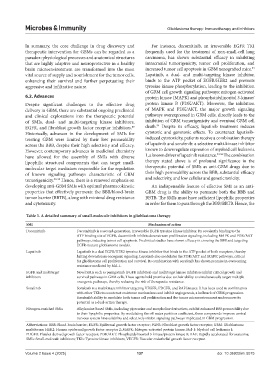
            Table 3. A detailed summary of small‑molecule inhibitors in glioblastoma therapy

            SMI                                                 Mechanism of action
            Dacomitinib           Dacomitinib is a second-generation, irreversible EGFR tyrosine kinase inhibitor. By covalently binding to the
                                  ATP-binding site of EGFR, dacomitinib inhibits downstream proliferative signaling, including MAPK and PI3K/AKT
                                  pathways, inducing tumor cell apoptosis. Preclinical studies have shown efficacy in crossing the BBB and targeting
                                  EGFR-mutant glioblastoma models.
            Lapatinib             Lapatinib is a dual EGFR/HER2 tyrosine kinase inhibitor that binds to the ATP pocket of both receptors, thereby
                                  halting downstream oncogenic signaling. Lapatinib also modulates the PI3K/AKT and MAPK pathways, critical
                                  for glioblastoma cell proliferation and survival. Its combination with sorafenib has shown promise in overcoming
                                  resistance mediated by Mcl-1.
            FGFR and multitarget   Novel SMIs such as pemigatinib (FGFR inhibitor) and multitarget kinase inhibitors inhibit critical growth and
            inhibitors            survival pathways in GBM cells. These agents hold promise due to their ability to simultaneously target multiple
                                  oncogenic pathways, thereby reducing the risk of therapeutic resistance.
            Sorafenib             Sorafenib is a multikinase inhibitor targeting VEGFR, PDGFR, and RAF kinases. It has been used in combination
                                  with other TKIs to counteract resistance mechanisms and inhibit angiogenesis, a hallmark of GBM progression.
                                  Sorafenib’s ability to modulate both tumor cell proliferation and the tumor microenvironment underscores its
                                  potential as a dual-action therapy.
            Nitrogen-enriched SMIs  Alkylamine-based SMIs, including piperazine and morpholine derivatives, exhibit enhanced BBB permeability due
                                  to their lipophilic properties. By modulating the oil-water partition coefficient, these compounds improve central
                                  nervous system bioavailability and selectively inhibit signaling pathways implicated in GBM progression.
            Abbreviations: BBB: Blood-brain barrier; EGFR: Epidermal growth factor receptor; FGFR: Fibroblast growth factor receptor; GBM: Glioblastoma
            multiforme; HER2: Human epidermal growth factor receptor 2; MAPK: Mitogen-activated protein kinase; Mcl-1: Myeloid cell leukemia 1;
            PDGFR: Platelet-derived growth factor receptor; PI3K/AKT: Phosphatidylinositol 3-kinase/protein kinase B; RAF: Rapidly accelerated fibrosarcoma;
            SMIs: Small-molecule inhibitors; TKIs: Tyrosine kinase inhibitors; VEGFR: Vascular endothelial growth factor receptor.


            Volume 2 Issue 4 (2025)                        137                               doi: 10.36922/mi.5075

