


Page 154 - MI-2-4
P. 154
Microbes & Immunity                                                   A case of cutaneous Nocardia farcinica


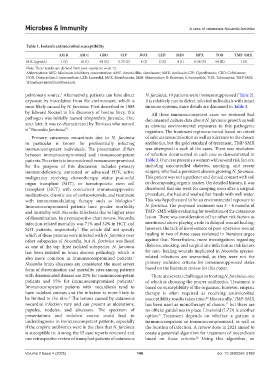
            Table 1. Isolate’s antimicrobial susceptibility
                          AM K     AM C     CRO     CIP     DOX     LZD     MIN     MFX      TOB     TMP‑ SMX
            MIC (µg/mL)    1 (S)   16 (I)  64 (R)  0.25 (S)  4 (I)   2 (S)  4 (I)   0.06 (S)  64 (R)   1 (S)
            Note: These results are derived from post-operative week 12.
            Abbreviations: MIC: Minimum inhibitory concentration; AMC: Amoxicillin- clavulanate; AMK: Amikacin; CIP: Ciprofloxacin; CRO: Ceftriaxone;
            DOX: Doxycycline; I: Intermediate; LZD: Linezolid; MFX: Moxifloxacin; MIN: Minocycline; R: Resistant; S: Susceptible; TOB: Tobramycin; TMP-SMX:
            Trimethoprim/sulfamethoxazole.

            pulmonary source.  Alternatively, patients can have direct   N. farcinica, 19 patients were immunosuppressed (Table 2).
                           1
            exposure by inoculation from the environment, which is   It is relatively rare to detect infected individuals with intact
            most likely caused by N. farcinica. First described in 1888   immune systems; more details are discussed in Table 3.
            by Edward Nocard in his discovery of bovine farcy, this   All three immunocompetent cases we reviewed had
            pathogen was initially named Streptothrix farcinica. One   documented culture data about N. farcinica growth as well
            year later, it was re-characterized by Trevisan who named   as obvious environmental exposures to this pathogenic
            it “Nocardia farcinica.” 1                         organism. The treatment regimens varied based on extent
              Primary cutaneous nocardiosis due to  N. farcinica   of subcutaneous infection as well as tolerance to the chosen
            in particular is known for preferentially infecting   antibiotics, but the gold standard of treatment, TMP-SMX
            immunocompetent individuals. The presentation differs   was attempted in each of the cases. There was resolution
            between immunocompromised and immunocompetent      of infection documented in each case as demonstrated in
            patients. The criteria to be considered immunocompromised   Table 3. Our case presents a woman with several risk factors,
            for the purpose of this discussion includes primary   including  uncontrolled  diabetes,  smoking,  and  recent
            immunodeficiency, untreated or advanced HIV, active   surgery, who had a persistent abscess growing N. farcinica.
            malignancy receiving chemotherapy, status post-solid   This patient was not a gardener and denied contact with soil
            organ transplant (SOT), or hematopoietic stem cell   or decomposing organic matter. On detailed history, it was
            transplant (HCT) with concurrent immunosuppressive   discovered that she went for camping soon after a surgical
            medications, chronic use of corticosteroids, and treatment   procedure, she had and washed her hands with well water.
            with immunomodulating therapy such as biologics.    This was hypothesized to be an environmental exposure to
                                                          4
            Immunocompromised patients have greater morbidity   N. farcinica. The proposed treatment was 3 – 6 months of
            and mortality with Nocardia infections due to higher rates   TMP- SMX while evaluating for resolution of the cutaneous
            of dissemination. In a retrospective chart review, Nocardia   lesion. There was consideration of her other risk factors as
            infection-related mortality was 71% and 32% in HCT and   mentioned above playing a role in delayed wound healing;
            SOT patients, respectively.  The article did not specify   however, the lack of involvement of post-operative wound
                                  5
            which of these patients were infected with N. farcinica over   healing in two of three cases reviewed in literature argue
            other subspecies of Nocardia, but N. farcinica was listed   against that. Nevertheless, more investigations regarding
            as  one  of  the top  three  isolated  subspecies.  N. farcinica   diabetes, smoking, and surgical site infection as risk factors
            has been isolated in brain abscess pathology, which is   for non- healing wounds implicated in Nocardia species-
            also more common in immunocompromised patients.    related infections are warranted, as they were not the
                                                          1
            Nocardia brain abscesses are considered the most severe   primary inclusion criteria for immunosuppressed states
            form of dissemination and mortality rates among patients   based on the literature review for this paper.
            with disseminated disease are 20% for immunocompetent   There are several challenges in treating N. farcinica, one
            patients and 55% for immunocompromised patients.    of which is choosing the proper antibiotics. Treatment is
                                                          1
            Immunocompetent patients with nocardiosis tend to   based on susceptibility of the organism; however, empiric
            have indolent courses and the infection is more likely to   therapy is often required as receiving antimicrobial
            be limited to the skin.  The lesions caused by cutaneous   susceptibility results takes time.  Historically, TMP-SMX
                              4
                                                                                         20
            nocardial  infection  vary  and  can  present  as  ulcerations,   has been used as monotherapy of choice,  but there are
                                                                                                 21
            papules, nodules, and abscesses. The spectrum of   no official guidelines in place. Linezolid (LZD) is another
            presentations and indolent course could lead to    option.  Treatment depends on whether a patient is
                                                                     3
            underdiagnosis in immunocompetent patients, especially   immunocompetent or immunocompromised, as well as
            if the empiric antibiotics were in the class that N. farcinica   the location of infection. A review done in 2021 aimed to
            is susceptible to. Among the 15 case reports reviewed and   create a potential algorithm for treatment of nocardiosis
            one retrospective review of transplant patients of cutaneous   based  on  these criteria.  Using this algorithm, an
                                                                                    22

            Volume 2 Issue 4 (2025)                        146                               doi: 10.36922/mi.5189

