


Page 155 - MI-2-4
P. 155
Microbes & Immunity                                                   A case of cutaneous Nocardia farcinica


            immunocompetent patient with only skin involvement   prior to the initiation of TMP-SMX. A literature review
            can be managed with empiric monotherapy (TMP-SMX   from 2017 of Nocardia species susceptibilities comments
            versus LZD) while awaiting antibiotic susceptibility and   on  historical  fluoroquinolone  resistance  especially  in
            then transitioned to the targeted oral regimen based   N. farcinica being as high as 50%.  The patient may have
                                                                                          21
            on sensitivities. Based on common susceptibilities, 3   benefited from those additional weeks of therapy with an
            – 6  months of TMP-SMX remains the gold-standard   effective antibiotic based on lab data; however, based on
            course of treatment. Other options include minocycline   evidence from many other cases, fluoroquinolones are not
            or amoxicillin-clavulanate (AMC) depending on      considered first-line therapy. Surveillance for up to a year
            sensitivities. As noted in Table 1, there is susceptibility to   is recommended for recurrence evaluation.  Secondary
                                                                                                   4
            fluoroquinolones (moxifloxacin and ciprofloxacin) and   prophylaxis is  generally  not  considered necessary  for
            the patient received two 2-week courses of ciprofloxacin   immunocompetent patients. The treatment algorithm for
                                                               lung  disease  or  disseminated  infection  with  or  without
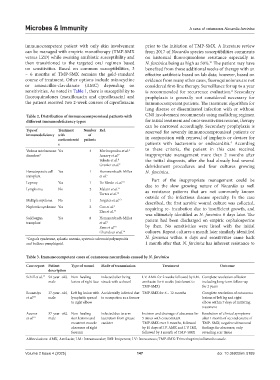
            Table 2. Distribution of immunocompromised patients with   CNS involvement recommends using multidrug regimen
            different immunodeficiency types                   for initial treatment and once sensitivities resume, therapy
                                                               can be narrowed accordingly. Secondary prophylaxis is
            Type of       Treatment   Number  Ref.             reserved for severely immunocompromised patients or
            immunodeficiency  with     of
                          corticosteroid   patients            in conjunction with removal of implants or devices for
                                                                                                   4
                          s                                    patients with bacteremia or endocarditis.  According
            Various autoimmune  Yes    4   Merinopoulos et al. 6  to these criteria, the patient in this case received
            disorders*                     Auzary et al. 7     inappropriate management more than 2  months after
                                           Yokota et al. 8     the initial diagnosis, after she had already had several
                                           Granier et al. 9    debridement procedures and four cultures growing
            Hematopoietic cell   Yes   1   Hemmersbach-Miller   N.  farcinica.
            transplant                     et al. 5
                                                                 Part of the inappropriate management could be
            Leprosy       Yes          1   De Nardo et al. 10  due to the slow growing nature of  Nocardia  as well
            Lymphoma      No           2   Malani et al. 11    as resistance patterns that are not commonly known
                                           Torres et al. 12
            Multiple myeloma  No       1   Angeles et al. 13   outside of the infectious disease specialty. In the case
                                                               described, the first aerobic wound culture was collected,
            Nephrotic syndrome Yes     2   Gao et al. 2        requiring  re-  incubation  due  to  insufficient  growth,  and
                                           Zhu et al. 14       was ultimately identified as N. farcinica 6 days later. The
            Solid organ   Yes          8   Hemmersbach-Miller   patient had been discharged on empiric cephalosporins
            transplant                     et al. 5
                                           Rees et al. 15      by then. No sensitivities were listed with the initial
                                           Ghandour et al. 16  cultures. Repeat cultures a month later similarly identified
            *Cogan’s syndrome, aplastic anemia, systemic sclerosis/polymyositis   N. farcinica  within 6  days and sensitivities came back
            and bullous pemphigoid.                            1 month after that. N. farcinica has inherent resistance to


            Table 3. Immunocompetent cases of cutaneous nocardiosis caused by N. farcinica
            Case report  Patient   Type of wound  Mode of transmission  Treatment              Outcome
                      description
            Schiff et al. 17  54-year- old,  Non- healing   Infected after being   I.V. AMK for 2 weeks followed by I.M.  Complete resolution of lesion
                      male     lesion of right face struck with a shovel  amikacin for 6 weeks (intolerant to   including long-term follow-up
                                                             TMP-SMX)                  for 2 years
            Bosamiya    37-year- old,  Left leg lesion with  Accidentally infected due  TMP-SMX for 6 – 12 months  Complete resolution of cutaneous
            et al. 18  male    lymphatic spread  to occupation as a farmer             lesions of left leg and right
                               to right elbow                                          elbow within 7 days of initiating
                                                                                       treatment
            Acuner    37-year- old,  Non- healing   Infected due to arm   Incision and drainage of abscesses for  Resolution of clinical symptoms
            et al. 19  male    skin lesions and   laceration from grease   5 times with concomitant  after 1 month of second course of
                               recurrent muscle   canister   TMP-SMX over 5 months, followed   TMP- SMX; negative ultrasound
                               abscesses of right            by 10 days of I.V. AMK and I.V. IMI,   findings for abscesses; only
                               forearm                       followed by 1 month of TMP- SMX  revealing scar tissue
            Abbreviations: AMK, Amikacin; I.M.: Intramuscular; IMI: Imipenem; I.V.: Intravenous; TMP-SMX: Trimethoprim/sulfamethoxazole.


            Volume 2 Issue 4 (2025)                        147                               doi: 10.36922/mi.5189

