


Page 61 - MI-2-4
P. 61
Microbes & Immunity                                                              Management of obesity


            generally accepted that all fermentable dietary fibers possess   14.3. Synbiotics
            prebiotic properties.  A functional food strategy has been   A synbiotic refers to a combination of a probiotic and a
                            115
            implemented to incorporate inulin into widely consumed   prebiotic. Synbiotics may have a more significant impact
            items, such as cereals, biscuits, infant foods, yogurts, breads,   on gut microbiota and host health compared to the
            and beverages at levels capable of eliciting a prebiotic   isolated consumption of either prebiotics  or probiotics.
            effect.  Various dietary supplements containing fructo-  This is because they provide probiotic bacteria along with
                 116
            oligosaccharides, mainly inulin, are also commercially   a prebiotic component that enhances the survival and
            available. Gut hormones, such as GLP-1 are essential for
            transmitting signals regarding nutritional and energy   growth of these beneficial microbes within the digestive
            status from the gut to the central nervous system, thereby   tract. Evidence suggests that synbiotics can be effective
            regulating appetite. Research indicates that prebiotics   in modifying the composition of the gut microbiota.
            upregulate Glp1 expression in obese mice, indicating that   For instance, the synbiotic combination of particular
            changes in gut microbiota may influence gastrointestinal   oligofructose-enriched inulin (SYN1) with  Lactobacillus
            hormone secretion.  In genetically obese mice, prebiotic   rhamnosus  GG and  Bifidobacterium lactis  Bb12 over a
                           117
            treatment was associated with weight loss, improved glucose   12-week period resulted in a 16% and 18% increase in
            tolerance, and reduced inflammation, alongside an increase   Bifidobacterium and Lactobacillus populations, while also
            in Bacteroidetes and a decrease in the Firmicutes phylum. In   leading to a 31% reduction in  Clostridium perfringens
                                                                     120
            a double-blind, placebo-controlled trial, supplementation   counts.  In vitro investigations have shown that synbiotics
            with oligofructose-enriched inulin in overweight or obese   outperform prebiotics and probiotics in their ability
            children led to a significant reduction in serum IL-6 levels   to modulate gut microflora. However, it is essential to
            and  body  weight.   In  addition,  a  randomized,  placebo-  document these findings through rigorously controlled
                          118
            controlled trial examining fecal  samples from obese   human intervention studies. At present, there is a limited
            individuals consuming inulin-type fructans revealed an   number of human studies examining the potential benefits
            increase in Bifidobacterium abundance and a reduction in   of synbiotics in relation to obesity. 121
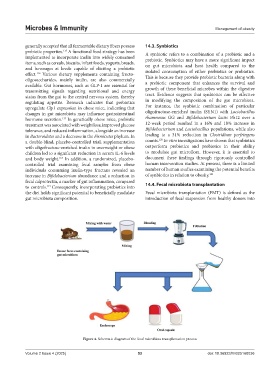
            fecal calprotectin, a marker of gut inflammation, compared   14.4. Fecal microbiota transplantation
            to controls. 119  Consequently, incorporating prebiotics into
            the diet holds significant potential to beneficially modulate   Fecal microbiota transplantation (FMT) is defined as the
            gut microbiota composition.                        introduction of fecal suspension from healthy donors into


                                    Figure 4. Schematic diagram of the fecal microbiota transplantation process


            Volume 2 Issue 4 (2025)                         53                           doi: 10.36922/MI025160036

