


Page 90 - MI-2-4
P. 90
Microbes & Immunity                                         Brachyspira pilosicoli novel outer membrane proteins


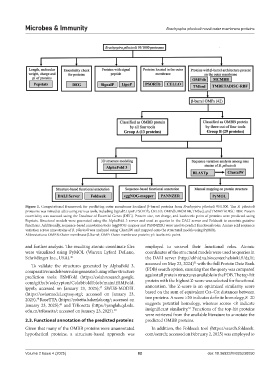
            Figure 1. Computational framework for predicting outer membrane-localized β-barrel proteins from Brachyspira pilosicoli 95/1000. The B. pilosicoli
            proteome was mined in silico using various tools, including SignalP, LipoP, PSORTb, CELLO, OMPdb, MCMBB, TMbed, and TMBETADISC-RBF. Protein
            essentiality was assessed using the Database of Essential Genes (DEG). Protein size, net charge, and isoelectric point of proteins were predicted using
            Pepstats. Structural models were generated using the AlphaFold 3 server and used as queries in the DALI server and Foldseek to annotate putative
            functions. Additionally, sequence-based annotation tools (eggNOG-mapper and PANNZER) were used to predict functional roles. Amino acid sequence
            variation across nine strains of B. pilosicoli was analyzed using ClustalW and mapped onto the structural models using PyMOL.
            Abbreviations: OMBB: Outer membrane β-barrel; OMP: Outer membrane protein; pI: Isoelectric point.

            and further analysis. The resulting atomic coordinate files   employed to unravel their functional roles. Atomic
            were visualized using PyMOL (Warren Lyford DeLano,   coordinates of the structural models were used as queries in
            Schrödinger Inc., USA). 46                         the DALI server (http://ekhidna.biocenter.helsinki.fi/dali/;
                                                                                   51
              To validate the structures generated by AlphaFold 3,   accessed on May 23, 2024)  with the full Protein Data Bank
            comparative models were also generated using other structure   (PDB) search option, ensuring that the query was compared
            prediction tools: ESMFold (https://colab.research.google.  against all protein structures available in the PDB. The top-hit
            com/github/sokrypton/ColabFold/blob/main/ESMFold.  protein with the highest Z-score was selected for functional
            ipynb; accessed on January 23, 2025),  SWISS-MODEL   annotation.  The  Z-score  is  an  optimized  similarity  score
                                           47
            (https://swissmodel.expasy.org/; accessed on January 23,   based on the sum of equivalent Cα–Cα distances between
            2025), RoseTTA (https://robetta.bakerlab.org/; accessed on   two proteins. A score >20 indicates definite homology, 8–20
                 48.
            January 23, 2025),  and TrRosetta (https://yanglab.qd.sdu.  suggests potential homology, whereas scores <8 indicate
                          49
                                                                                 52
            edu.cn/trRosetta/; accessed on January 23, 2025). 50  insignificant similarity.  Functions of the top-hit proteins
                                                               were retrieved from the available literature to annotate the
            2.3. Functional annotation of the predicted proteins  predicted OMBB proteins.
            Given that many of the OMBB proteins were unannotated   In addition, the Foldseek tool (https://search.foldseek.
            hypothetical proteins, a structure-based approach was   com/search; accessed on February 2, 2025) was employed to


            Volume 2 Issue 4 (2025)                         82                           doi: 10.36922/MI025230050

