


Page 76 - OR-1-1
P. 76
A                                           C


             B


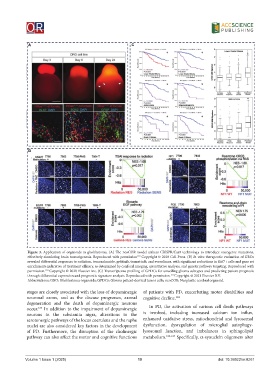
             Figure 3. Application of organoids in glioblastoma. (A) The neoCOR model utilizes CRISPR/Cas9 technology to introduce oncogenic mutations,
             effectively simulating brain tumorigenesis. Reproduced with permission  Copyright © 2018 Cell Press. (B) In vitro therapeutic evaluation of GBOs
                                                           119
             revealed differential responses to radiation, temozolomide, gefitinib, trametinib, and everolimus, with significant reductions in Ki67+ cells and gene set
             enrichments indicative of treatment efficacy, as determined by confocal imaging, quantitative analysis, and genetic pathway targeting. Reproduced with
             permission.  Copyright © 2020 Elsevier Inc. (C) Transcriptome profiling of GPDCs for unveiling glioma subtypes and predicting patient prognosis
                    120
             through differential expression and prognostic signature analysis. Reproduced with permission. Copyright © 2021 Elsevier B.V.
                                                                          121
             Abbreviations: GBO: Glioblastoma organoids; GPDCs: Glioma patient-derived tumor cells; neoCOR: Neoplastic cerebral organoid.
            stages are closely associated with the loss of dopaminergic   of patients with PD, exacerbating motor disabilities and
            neuronal axons, and as the disease progresses, axonal   cognitive decline. 124
            degeneration and the death of dopaminergic neurons
            occur.  In addition to the impairment of dopaminergic   In PD, the activation of various cell death pathways
                 123
            neurons in the substantia nigra, alterations in the   is involved, including increased calcium ion influx,
            serotonergic pathways of the locus coeruleus and the raphe   enhanced oxidative stress, mitochondrial and lysosomal
            nuclei are also considered key factors in the development   dysfunction, dysregulation of microglial autophagy-
            of PD. Furthermore, the disruption of the cholinergic   lysosomal function, and imbalances in sphingolipid
            pathway can also affect the motor and cognitive functions   metabolism. 125-127  Specifically, α-synuclein oligomers alter


            Volume 1 Issue 1 (2025)                         10                                doi: 10.36922/or.8261

