


Page 142 - OR-1-2
P. 142
A


             B


             C


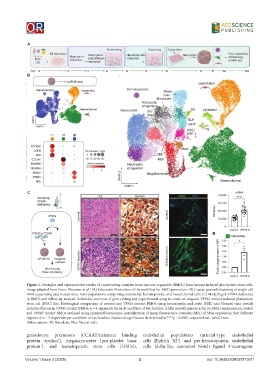
            Figure 1. Strategies and representative results of constructing complex bone marrow organoids (BMOs) from human induced pluripotent stem cells.
                                       3
            Image adapted from Frenz-Wiessner et al.  (A) Schematic illustration of the workflow for BMO generation. (B) Coarse-grained clustering of single-cell
            RNA sequencing data reveals three main populations comprising endothelial, hematopoietic, and mesenchymal cells. (C) Modeling of VPS45 deficiency
            in BMOs and follow-up analysis. Schematic overview of gene editing and experimental setup to create an isogenic VPS45 mutant induced pluripotent
            stem cell (iPSC) line. Histological comparison of control and VPS45 mutant BMOs using hematoxylin and eosin (H/E) and Gomori stain reveals
            reticulin fibrosis in VPS45 mutant BMOs; n = 8 organoids for each condition of two batches. Alpha smooth muscle actin (α-SMA) expression in control
            and VPS45 mutant BMOs analyzed using immunofluorescence; quantification of mean fluorescence intensity (MFI) of SMA expression; four different
                   -
            regions of n = 5 organoids per condition of two batches. Statistical significance determined at ****p < 0.0001, unpaired two-tailed t-test.
            Abbreviations: KI: Knock-in; Neu: Neural cells.

            granulocyte  precursors  [CCAAT/enhancer  binding  endothelial  populations  (arterial-type  endothelial
            protein epsilon ], megakaryocytes [pro-platelet basic   cells [Ephrin B2 ] and pre-hematopoietic endothelial
                          +
                                                                            +
            protein ], and hematopoietic stem cells [HSCs]),   cells [delta-like canonical Notch ligand 4 neurogenic
                  +
                                                                                                   +
            Volume 1 Issue 2 (2025)                         2                            doi: 10.36922/OR025110011

