


Page 137 - OR-1-2
P. 137
A                                                    B


                        C
                                                                             D


                        E                                    F               G


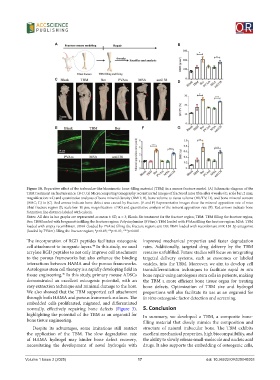
            Figure 10. Reparative effect of the trabeculae-like biomimetic bone-filling material (TBM) in a mouse fracture model. (A) Schematic diagram of the
            TBM treatment on fracture mice. (B-D, G) Microcomputing tomography reconstructed images of fractured mice tibia after 4 weeks (C; scale bar: 2 mm;
            magnification: ×2) and quantitative analyzes of bone mineral density (BMD; B), bone volume to tissue volume (BV/TV; D), and bone mineral content
            (BMC; G) in (C). Red arrows indicate bone defect area caused by fracture. (E and F) Representative images show the mineral apposition rate of mice
            tibial fracture region (E; scale bar: 10 μm; magnification: ×700) and quantitative analysis of the mineral apposition rate (F). Red arrows indicate bone
            formation line distance labeled with calcein.
            Notes: All data in bar graphs are represented as mean ± SD, n = 3; Blank: No treatment for the fracture region; TBM: TBM filling the fracture region;
            Ber: TBM loaded with bergamottin filling the fracture region; Polyvinylamine (PVAm): TBM loaded with PVAm filling the fracture region; MSA: TBM
            loaded with empty recombinant tRNA (loaded by PVAm) filling the fracture region; anti138: TBM loaded with recombinant miR-138-5p antagonist
            (loaded by PVAm) filling the fracture region; *p<0.05; **p<0.01; ***p<0.001.
            The incorporation of RGD peptides facilitates osteogenic   improved mechanical properties and faster degradation
            cell attachment to inorganic layers.  In this study, we used   rates. Additionally, targeted drug delivery by the TBM
                                        44
            acrylate RGD peptides to not only improve cell attachment   remains unfulfilled. Future studies will focus on integrating
            to the porous frameworks but also enhance the binding   targeted delivery systems, such as exosomes or labeled
            interactions between HAMA and the porous frameworks.   vesicles, into the TBM. Moreover, we aim to develop cell
            Autologous stem cell therapy is a rapidly developing field in   transdifferentiation techniques to facilitate rapid  in situ
            tissue engineering.  In this study, primary mouse ADSCs   bone repair using autologous stem cells in patients, making
                           45
            demonstrated an excellent osteogenic potential, with an   the TBM a more efficient bone tissue organ for treating
            easy extraction technique and minimal damage to the host.   bone defects. Optimization of TBM size and hydrogel
            We also showed that the TBM supported cell attachment   proportions will  also facilitate its use as an organoid for
            through both HAMA and porous framework surfaces. The   in vitro osteogenic factor detection and screening.
            embedded cells proliferated, migrated, and differentiated
            normally, effectively repairing bone defects (Figure  3),  5. Conclusion
            highlighting the potential of the TBM as an organoid for   In summary, we developed a TBM, a composite bone-
            bone tissue engineering.                          filling material that closely mimics the composition and
               Despite its advantages, some imitations still restrict   structure  of  natural  trabecular  bone.  The  TBM  exhibits
            the application of the TBM. The slow degradation rate   excellent mechanical properties, high biocompatibility, and
            of HAMA hydrogel may hinder bone defect recovery,   the ability to slowly release small-molecule and nucleic acid
            necessitating  the development of  novel  hydrogels with   drugs. It also supports the embedding of osteogenic cells,


            Volume 1 Issue 2 (2025)                         17                           doi: 10.36922/OR025040003

