


Page 64 - OR-1-3
P. 64
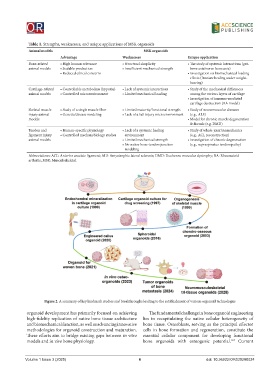
Table 1. Strengths, weaknesses, and unique applications of MSK organoids
             Animal models                                    MSK organoids
                           Advantage                 Weaknesses                  Unique application
             Bone-related   • High human relevance   • Structural simplicity     •  The study of systemic interactions (gut-
             animal models  • Scalable production    • Insufficient mechanical strength  bone axis/nerve-bone axis)
                           • Reduced ethical concerns                            •  Investigation on biomechanical loading
                                                                                  effects (fracture healing under weight-
                                                                                  bearing)
             Cartilage-related   • Controllable metabolism (hypoxia)  • Lack of systemic interactions  •  Study of the mechanical differences
             animal models  • Controlled microenvironment  • Limited mechanical loading  among the various layers of cartilage
                                                                                 •  Investigation of immune-mediated
                                                                                  cartilage destruction (RA model)
             Skeletal muscle   • Study of a single muscle fiber  • Limited maturity/functional strength  •  Study of neuromuscular diseases
             injury animal   • Genetic/disease modeling  • Lack of a full injury microenvironment  (e.g., ALS)
             models                                                              •  Model for chronic muscle degeneration
                                                                                  & fibrosis (e.g. DMD)
             Tendon and    • Human-specific physiology  •  Lack of a systemic healing   •  Study of whole-joint biomechanics
             ligament injury   • Controlled mechanobiology studies  environment   (e.g., ACL reconstruction)
             animal models                           • Limited mechanical strength  •  Investigation of chronic degeneration
                                                     •  No native bone-tendon junction   (e.g., supraspinatus tendinopathy)
                                                      modeling
             Abbreviations: ACL: Anterior cruciate ligament; ALS: Amyotrophic lateral sclerosis; DMD: Duchenne muscular dystrophy; RA: Rheumatoid
             arthritis; MSK: Musculoskeletal.


                    Figure 2. A summary of key landmark studies and breakthroughs leading to the establishment of various organoid technologies

            organoid development has primarily focused on achieving   The fundamental challenge in bone organoid engineering
            high-fidelity replication of native bone tissue architecture   lies in recapitulating the native cellular heterogeneity of
            and biomechanical function, as well as advancing innovative   bone tissue. Osteoblasts, serving as the principal effector
            methodologies for organoid construction and maturation.   cells in bone formation and regeneration, constitute the
            These efforts aim to bridge existing gaps between in vitro   essential cellular component for developing functional
            models and in vivo bone physiology.               bone organoids with osteogenic potential.  Current
                                                                                                   124


            Volume 1 Issue 3 (2025)                         6                            doi: 10.36922/OR025280024

