


Page 82 - OR-1-3
P. 82
A                      C                 D


                           B


                           E                             F


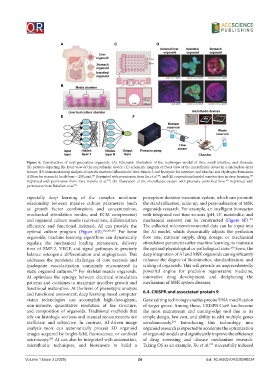
            Figure  6.  Construction of next-generation organoids. (A)  Schematic illustration of the multiorgan model of liver, small intestine, and stomach;
            (B) pictures depicting the front view of the microfluidic device; (C) schematic diagram of front view of the microfluidic device in a microplate array
            format; (D) immunostaining analysis of specific markers (albumin for liver, Mucin 2 and lysozyme for intestine, and Muc5ac and Hydrogen/Potassium
                                                                    281
                                                                                                           282
            ATPase for stomach) (scale bars = 200 μm).  Reprinted with permission from Jin et al. ; and (E) conventional model construction in deep learning.
                                        281
                                               282
            Reprinted with permission from Zare Harofte et al. ; (F) Illustration of the microfluidic system with precisely controlled flow.  Reprinted with
                                                                                                 283
            permission from Babaliari et al. 283
            especially deep learning of the complex nonlinear   perception-decision-execution system, which can promote
            relationship  between  massive  culture  parameters  (such   the standardization, scale-up, and personalization of MSK
            as growth factor combinations and concentrations,   organoids research. For example, an intelligent bioreactor
            mechanical stimulation modes, and ECM components)   with integrated real-time sensors (pH, O , metabolite, and
                                                                                               2
            and organoid culture results (survival rate, differentiation   mechanical sensors) can be constructed (Figure  6F).
                                                                                                           283
            efficiency,  and  functional  indexes),  AI  can  provide  the   The collected microenvironmental data can be input into
            optimal culture program (Figure  6E). 282,286,287  For bone   the AI model, which dynamically adjusts the perfusion
            organoids, machine learning algorithms can dynamically   flow rate, nutrient supply, drug dosage, or mechanical
            regulate  the  mechanical  loading  parameters,  delivery   stimulation parameters after machine learning, to maintain
            time of BMP-2, VEGF, and signal pathways to precisely   the optimal physiological or pathological state.  Soon, the
                                                                                                   290
            balance  osteogenic  differentiation  and  angiogenesis.  This   deep integration of AI and MSK organoids can significantly
            addresses the persistent challenges of core necrosis and   enhance the degree of biomimetics, standardization, and
            inadequate vascularization commonly encountered in   scaling of organoids. This will provide an unprecedentedly
            static organoid cultures.  For skeletal muscle organoids,   powerful engine for precision regenerative medicine,
                                288
            AI optimizes the synergy between electrical stimulation   innovative drug development, and deciphering the
            patterns and cytokines to maximize myofiber growth and   mechanism of MSK system diseases.
            functional maturation. At the level of phenotypic analysis
            and functional assessment, deep learning-based computer   6.4. CRISPR and associated protein 9
            vision technologies can accomplish high-throughput,   Gene editing technology enables precise DNA modification
            non-invasive,  quantitative  resolution  of  the  structure,   of target genes. Among these, CRISPR-Cas9 has become
            and composition of organoids. Traditional methods that   the most mainstream and cutting-edge tool due to its
            rely on histologic sections and manual measurements are   simple design, low cost, and ability to edit multiple genes
            inefficient and subjective. In contrast, AI-driven image   simultaneously.  Introducing this technology into
                                                                          291
            analysis tools can automatically process 3D organoid   organoid research is expected to accelerate the optimization
            images acquired by bright-field, fluorescence, or confocal   of organoid models and significantly improve the efficiency
            microscopy.  AI can also be integrated with automation,   of drug screening and disease mechanism research.
                      289
            microfluidic techniques, and biosensors to build a   Taking OS as an example, Xu et al.  successfully induced
                                                                                          292

            Volume 1 Issue 3 (2025)                         24                           doi: 10.36922/OR025280024

