


Page 34 - TD-1-1
P. 34
Tumor Discovery                                              The mechanism of cancer-related cognitive decline


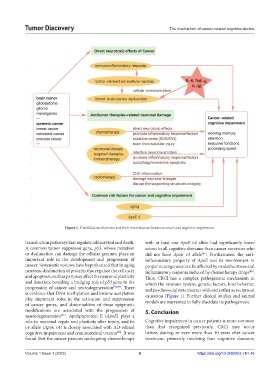
                             Figure 1. Candidate mechanisms and their interrelations between cancer and cognitive impairment.


            transduction pathways that regulate cell survival and death.   with at least one  ApoE  ε4 allele had significantly lower
            A common tumor suppressor gene, p53, whose mutation   scores in all cognitive domains than cancer survivors who
            or dysfunction can damage the cellular genome, plays an   did not have  ApoE  ε4  allele . Furthermore, the anti-
                                                                                       [87]
            important role in the development and  progression of   inflammatory property of  ApoE and its involvement in
            cancer. Systematic reviews have hypothesized that in aging   proper neurogenesis can be affected by oxidative stress and
            neurons, dysfunction of proteins that regulate the cell cycle   inflammatory response induced by chemotherapy drugs .
                                                                                                           [88]
            and apoptosis, such as p53, may affect the neuronal plasticity   Thus, CRCI has a complex pathogenetic mechanism in
            and function, revealing a bridging role of p53 gene in the   which the immune system, genetic factors, host behavior,
            progression of cancer and neurodegeneration [83,84] . There   and psychosocial state interact with each other as reciprocal
            is evidence that DNA methylation and histone acetylation   causation (Figure 1). Further clinical studies and animal
            play important roles in the activation and suppression   models are warranted to fully elucidate its pathogenesis.
            of cancer genes, and abnormalities of these epigenetic
            modifications are associated with the progression of   5. Conclusion
            neurodegeneration . Apolipoprotein E (ApoE) plays a
                           [85]
            role in neuronal repair and plasticity after injury, and its   Cognitive impairment in cancer patients is more common
            ε4 allele (ApoE ε4) is closely associated with AD-related   than that recognized previously. CRCI may occur
            cognitive impairment and craniocerebral trauma . It was   before, during, or even more than 10  years after cancer
                                                   [86]
            found that the cancer patients undergoing chemotherapy   treatment, primarily involving four cognitive domains,

            Volume 1 Issue 1 (2022)                         6                        https://doi.org/10.36922/td.v1i1.46

