


Page 29 - TD-2-2
P. 29
Tumor Discovery                                                       A comprehensive review of bexarotene


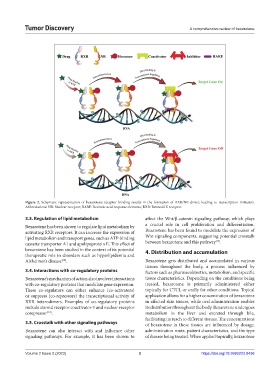
            Figure  2.  Schematic representation of bexarotene receptor binding results in the formation of RXR/NR dimer, leading to transcription initiation.
            Abbreviations: NR: Nuclear receptor; RARE: Retinoic acid response elements; RXR: Retinoid X receptor.

            3.3. Regulation of lipid metabolism                affect the Wnt/β-catenin signaling pathway, which plays
            Bexarotene has been shown to regulate lipid metabolism by   a crucial role in cell proliferation and differentiation.
            activating RXR receptors. It can increase the expression of   Bexarotene has been found to modulate the expression of
            lipid metabolism and transport genes, such as ATP-binding   Wnt signaling components, suggesting potential crosstalk
                                                                                             [14]
            cassette transporter A1 and apolipoprotein E. This effect of   between bexarotene and this pathway .
            bexarotene has been studied in the context of its potential   4. Distribution and accumulation
            therapeutic role in disorders such as hyperlipidemia and
            Alzheimer’s disease .                              Bexarotene gets distributed and accumulated in various
                           [12]
                                                               tissues  throughout  the  body,  a  process  influenced  by
            3.4. Interactions with co-regulatory proteins      factors such as pharmacokinetics, metabolism, and specific
            Bexarotene’s mechanism of action also involves interactions   tissue characteristics. Depending on the conditions being
            with co-regulatory proteins that modulate gene expression.   treated, bexarotene is primarily administered either
            These co-regulators can either enhance (co-activators)   topically for CTCL or orally for other conditions. Topical
            or suppress (co-repressors) the transcriptional activity of   application allows for a higher concentration of bexarotene
            RXR heterodimers. Examples of co-regulatory proteins   in affected skin tissues, while oral administration enables
            include steroid receptor coactivator-1 and nuclear receptor   its distribution throughout the body. Bexarotene undergoes
            corepressor .                                      metabolism in the liver and excreted through bile,
                     [13]
                                                               facilitating its reach to different tissues. The concentrations
            3.5. Crosstalk with other signaling pathways       of bexarotene in these tissues are influenced by dosage,
            Bexarotene  can  also  interact  with  and  influence  other   administration route, patient characteristics, and the type
            signaling pathways. For example, it has been shown to   of disease being treated. When applied topically, bexarotene


            Volume 2 Issue 2 (2023)                         3                          https://doi.org/10.36922/td.0436

