


Page 11 - TD-3-3
P. 11
Tumor Discovery                                                    Immune and epigenetic therapies for TNBC


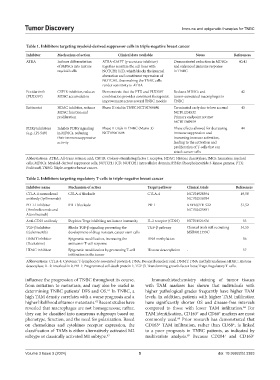
            Table 1. Inhibitors targeting myeloid‑derived suppressor cells in triple‑negative breast cancer
            Inhibitor    Mechanism of action       Clinical data available          Notes            References
            ATRA         Induces differentiation   ATRA+DAPT (γ-secretase inhibitor)   Demonstrated reduction in MDSCs   40,41
                         of MDSCs into mature   together sensitize the cell lines with   and enhanced immune response
                         myeloid cells       NOTCH1 ICD, which blocks the internal   in TNBC
                                             aberration and constituent expression of
                                             NOTCH1, thus making the TNBC cells
                                             render sensitivity to ATRA
            Pexidartinib   CSF1R inhibitor, reduces   Demonstrate that the PTX and PLX3397   Reduces MDSCs and   42
            (PLX3397)    MDSC accumulation   combination provides consistent therapeutic   tumor-associated macrophages in
                                             improvement across several TNBC models  TNBC
            Entinostat   HDAC inhibitor, reduces   Phase II trial in TNBC NCT02708680  Terminated early due to low accrual   43
                         MDSC function and                                 NCT01234532
                         proliferation                                     Primary endpoint not met
                                                                           NCT01349959
            PI3Kγ inhibitors   Inhibits PI3Kγ signaling   Phase II trials in TNBC (Mario-3)   These effects allowed for decreasing   44
            (e.g., IPI-549)  in MDSCs, reducing   NCT03961698              immune suppression and
                         their immunosuppressive                           increasing immune activation,
                         activity                                          leading to the activation and
                                                                           proliferation of T-cells that can
                                                                           attack cancer cells
            Abbreviations: ATRA: All-trans retinoic acid; CSF1R: Colony-stimulating factor 1 receptor; HDAC: Histone deacetylase; IMCs: Immature myeloid
            cells; MDSCs: Myeloid-derived suppressor cells; NOTCH1 ICD: NOTCH1 intracellular domain; PI3Kγ: Phosphoinositide 3-kinase gamma; PTX:
            Paclitaxel; TNBC: Triple-negative breast cancer.

            Table 2. Inhibitors targeting regulatory T‑cells in triple‑negative breast cancer
            Inhibitor name    Mechanism of action               Target pathway   Clinical trials     References
            CTLA-4 monoclonal   CTLA-4 blockade                 CTLA-4           NCT01928394           49,50
            antibody (Ipilimumab)                                                NCT02536794
            PD-L1 inhibitor   PD-1 blockade                     PD-1             KEYNOTE-522           51,52
            (Pembrolizumab and                                                   NCT02425891
            Atezolizumab)
            Anti-CD25 antibody  Depletes Tregs inhibiting antitumor immunity  IL-2 receptor (CD25)  NCT01521676  53
            TGF-β inhibitor   Blocks TGF-β signaling preventing the   TGF-β pathway  Clinical trials still recruiting  54,55
            (Galunisertib)    development of drug-resistant cancer stem cells    MSB0011359C
            DNMT inhibitor    Epigenetic modification, increasing the   DNA methylation  -              56
            (Decitabine)      antitumor T-cell response
            HDAC inhibitor    Epigenetic modification by promoting T-cell   Histone deacetylation  -    57
                              infiltration in the tumor
            Abbreviations: CTLA-4: Cytotoxic T-lymphocyte associated protein 4; DNA; Deoxyribonucleic acid; DNMT: DNA methyltransferase; HDAC: Histone
            deacetylase; IL-2: Interleukin 2; PD-1: Programmed cell death protein 1; TGF-β: Transforming growth factor-beta; Tregs: Regulatory T-cells.


            influence the progression of TNBC throughout its course,   Immunohistochemistry  staining  of  tumor  tissues
            from  initiation  to  metastasis,  and  may  also  be  useful  in   with TAM markers has shown that individuals with
            determining TNBC patients’ DFS and OS.  In TNBC, a   higher pathological grades frequently have higher TAM
                                               61
            high TAM density correlates with a worse prognosis and a   levels. In addition, patients with higher TAM infiltration
            higher likelihood of tumor metastasis.  Recent studies have   have  significantly  shorter  OS  and  disease-free  intervals
                                          62
            revealed that macrophages are not homogeneous; rather,   compared to those with lower TAM infiltration.  For
                                                                                                        64
            they can be classified into numerous subgroups based on   TAM identification, CD163  and CD68  markers are most
                                                                                     +
                                                                                              +
            phenotype, function, and the need for polarization. Based   commonly used.  Prior research has demonstrated that
                                                                            64
            on  chemokines  and cytokines  receptor  expression,  the   CD163  TAM infiltration, rather than CD68 , is linked
                                                                     +
                                                                                                    +
            classification of TAMs is either alternatively activated M2   to a poor prognosis in TNBC patients, as indicated by
            subtype or classically activated M1 subtype. 63    multivariate analysis.  Because CD204  and CD163
                                                                                                             +
                                                                                 65
                                                                                                 +
            Volume 3 Issue 3 (2024)                         5                                 doi: 10.36922/td.3383

