


Page 16 - TD-3-3
P. 16
Tumor Discovery                                                    Immune and epigenetic therapies for TNBC


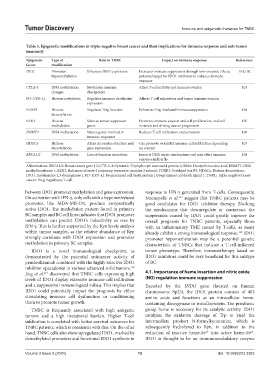
            Table 5. Epigenetic modifications in triple‑negative breast cancer and their implications for immune response and anti‑tumor
            immunity
            Epigenetic   Type of           Role in TNBC               Impact on immune response      References
            factor     modification
            IDO1       Promoter       Enhances IDO1 expression  Increases immune suppression through non-enzymic effects;   101,102
                       hypomethylation                      potential target for IDO1 inhibitors to enhance immune
                                                            response
            CTLA-4     DNA methylation   Modulates immune   Alters T-cell activity and immune evasion   103
                       changes        checkpoints
            PD-1/PD-L1  Histone acetylation  Regulates immune checkpoint   Affects T-cell exhaustion and tumor immune evasion
                                      expression
            FOXP3      Histone        Regulates Treg function  Enhances Treg-mediated immunosuppression  104
                       deacetylation
            EZH2       Histone        Silences tumor suppressor   Promotes immune evasion and cell proliferation, and cell   105
                       methylation    genes                 invasion and driving cancer progression
            DNMT1      DNA methylation  Silence genes involved in   Reduces T-cell infiltration and activation  106
                                      immune responses
            HDACs      Histone        Alters chromatin structure and   Can promote or inhibit immune cell infiltration depending   107
                       deacetylation  gene expression       on context
            BRCA1/2    DNA methylation  Loss of function mutations  Impacts DNA repair mechanisms and may affect immune   108
                                                            response indirectly
            Abbreviations: BRCA1/2: Breast cancer gene 1/2; CTLA-4: Cytotoxic T-lymphocyte associated protein 2; DNA: Deoxyribonucleic acid; DNMT1: DNA
            methyltransferase 1; EZH2: Enhancer of zeste 2 polycomp repressive complex 2 subunit; FOXP3: Forkhead box P3; HDACs: Histone deacetylases;
            IDO1: Indoleamine 2,3-dioxygenase 1; PD-1/PD-L1: Programmed cell death protein 1/programmed cell death ligand 1; TNBC: Triple-negative breast
            cancer; Treg: Regulatory T-cell.

            between IDO1 promoter methylation and gene expression.   response to IFN-γ generated from T-cells. Consequently,
            On activation with IFN-γ, only cells with a hypomethylated   Noonepalle  et al.  suggest that TNBC patients may be
                                                                             117
            promoter, like MDA-MB-231, produce enzymatically   good candidates for IDO1 inhibitor therapy. Blocking
            active IDO1. The methylation pattern found in primary   the mechanisms that downregulate or counteract the
            BC samples and BC cell lines indicates that IDO1 promoter   suppression caused by IDO1 could greatly improve the
            methylation can predict IDO1’s inducibility  in vivo  by   overall prognosis for TNBC patients, especially those
            IFN-γ. This is further supported by the Kyn levels analysis   with an inflammatory TME caused by T-cells, as many
            within tumor samples, as the relative abundance of Kyn   already exhibit a strong immunological response.  IDO1
                                                                                                      118
            strongly correlates with IDO1 expression and promoter   promoter hypomethylation may be a potential genetic
            methylation in primary BC samples.                 characteristic of TNBCs that indicate a T-cell-inflamed
              IDO1 is a novel immunological checkpoint, as     tumor phenotype. Therefore, immunotherapy based on
            demonstrated by the potential anticancer activity of   IDO1 inhibitors could be very beneficial for this subtype
            pembrolizumab combined with the highly selective IDO1   of BC.
            inhibitor epacadostat in various advanced solid tumors.
                                                         113
            Jing et al.  discovered that TNBC cells expressing high   4.1. Importance of heme insertion and nitric oxide
                    113
            levels of IDO1 display extensive immune cell infiltration   (NO) regulation immune suppression
            and a suppressive immunological milieu. This implies that   Encoded by the  INDO gene (located on human
            IDO1 could potentially impact the prognosis by either   chromosome 8p22), the IDO1 protein consists of 403
            stimulating immune cell dysfunction or conditioning   amino acids and functions as an intracellular heme-
            them to promote tumor growth.                      containing dioxygenase or metalloprotein. The prosthetic
              TNBC is frequently associated with high antigenic   group heme is necessary for its catalytic activity. IDO1
            tumors and a high mutational burden. Higher T-cell   catalyzes the oxidative cleavage of Trp to yield the
            infiltration is correlated with better survival outcomes for   intermediate product N-formylkynurenine,  which is
            TNBC patients, which is consistent with this. On the other   subsequently  hydrolyzed  to  Kyn,  in  addition  to  the
                                                                                        3+
                                                                                                            2+
            hand, TNBC cells also show upregulated IDO1, marked by   reduction of  inactive  heme-Fe  into active  heme-Fe .
            demethylated promoters and functional IDO1 synthesis in   IDO1 is thought to be an immunomodulatory enzyme
            Volume 3 Issue 3 (2024)                         10                                doi: 10.36922/td.3383

