


Page 121 - TD-3-3
P. 121
Tumor Discovery                                                    CRMO presenting as multifocal bone LCH


                                                               A                       B


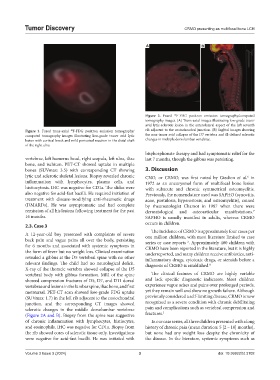
                                                               Figure  2. Fused  F-FDG positron emission tomography/computed
                                                                           18
                                                               tomography images. (A) Trans-axial images illustrating low-grade tracer
                                                               avid lytic-sclerotic lesion in the anterolateral aspect of the left seventh
            Figure  1. Fused trans-axial  F-FDG positron emission tomography/  rib adjacent to the costochondral junction. (B) Sagittal images showing
                               18
            computed  tomography  images  illustrating  low-grade  tracer  avid  lytic   the non-tracer avid collapse of the D7 vertebra and ill-defined sclerotic
            lesion with cortical break and mild periosteal reaction in the distal shaft   changes in multiple dorsolumbar vertebrae.
            of the right ulna
                                                               bisphosphonate therapy and had symptomatic relief for the
            vertebrae, left humerus head, right scapula, left ulna, iliac   last 7 months, though the gibbus was persisting.
            bone,  and  ischium.  PET-CT  showed  uptake  in  multiple
            bones  (SUVmax:  3.5)  with corresponding  CT showing   3. Discussion
            lytic and sclerotic skeletal lesions. Biopsy revealed chronic   CNO, or CRMO, was first noted by Giedion  et al.  in
                                                                                                          6
            inflammation  with  lymphocytes,  plasma  cells,  and   1972  as an  aneurysmal  form  of  multifocal bone lesion
            histiocytosis. IHC was negative for CD1a. The slides were   with subacute and chronic symmetrical osteomyelitis.
            also negative for acid-fast bacilli. He required initiation of   Previously, the nomenclature used was SAPHO (synovitis,
            treatment with disease-modifying anti-rheumatic drugs   acne, pustulosis, hyperostosis, and osteomyelitis), coined
            (DMARDs). He was asymptomatic and had complete     by rheumatologist Chamot in 1987 when there were
            remission of all his lesions following treatment for the past   dermatological  and  osteoarticular  manifestations.
                                                                                                             7
            16 months.                                         SAPHO is usually manifest in adults, whereas CRMO
                                                               occurs in children.
            2.3. Case 3
                                                                 The incidence of CRMO is approximately four cases per
            A 12-year-old boy presented with complaints of severe   one million children, with most literature limited to case
            back pain and vague pains all over the body, persisting   series or case reports  . Approximately 400 children with
                                                                                 2
            for  6  months  and associated with  systemic  symptoms  in   CRMO have been reported in the literature, but it is highly
            the form of fever but no weight loss. Clinical examination   underreported, and many children receive antibiotics, anti-
            revealed a gibbus at the D5 vertebral spine with no other   inflammatory drugs, cytotoxic drugs, or steroids before a
            relevant  findings.  The  child  had  no  neurological  deficit.   diagnosis of CRMO is established. 8
            X-ray of the thoracic vertebra showed collapse of the D5
            vertebral body with gibbus formation. MRI of the spine   The clinical features of CRMO are highly variable
            showed compression fractures of D5, D7, and D11 dorsal   and lack specific diagnostic indicators. Most children
            vertebrae and lesions in the lumbar spine, iliac bone, and first   experience vague aches and pains over prolonged periods,
            metatarsal. PET-CT scan showed low-grade FDG uptake   yet they remain well and show no growth failure. Although
            (SUVmax: 1.7) in the left rib adjacent to the costochondral   previously considered a self-limiting disease, CRMO is now
            junction, and the corresponding CT images showed   recognized as a severe condition with chronic debilitating
            sclerotic changes in the middle dorsolumbar vertebrae   pain and complications such as vertebral compression and
            (Figure 2A and B). Biopsy from the spine was suggestive   fractures. 2
            of  chronic  inflammation  with  lymphocytes,  histiocytes,   In our case series, all three children presented with a long
            and eosinophils. IHC was negative for CD1a. Biopsy from   history of chronic pain (mean duration: 5 [2 – 10] months),
            the rib showed cores of sclerotic tissue only. Investigations   but none had any weight loss despite the chronicity of
            were negative for acid-fast bacilli. He was initiated with   the disease. In the literature, systemic symptoms such as


            Volume 3 Issue 3 (2024)                         3                                 doi: 10.36922/td.3102

