


Page 103 - AC-2-2
P. 103
Arts & Communication                                                Visual decoding: Buddhist image houses


            perceive a given design as fulfilling two distinct roles:   viewers in correctly identifying motifs occupying these
            objective and supportive. While each design serves   auxiliary roles. Furthermore, instances wherein the same
            a  deliberate  purpose  within  its  designated  role,  the   motif assumes a supportive and objective role within the
            identification of a design in the supportive role is   same Buddhist image house, as depicted by the painter,
            primarily determined by the inherent characteristics of Sri   demonstrate viewers’ cognitive adeptness in distinguishing
            Lankan decorative arts. Coomaraswamy  elucidates this   between roles without conflating their significance.
                                             5
            phenomenon as a process of “combination of element”   Another illustrative example involves the application
            that finds particular relevance in instances where designs   of “Nari Devi,” belonging to the conceptual category,
            function in a supporting capacity.
                                                               within the Buddhist image house of the design. In this
              The application of designs, whether individually or in   instance, the motif serves a dual role  within the statue
            a cohesive arrangement, within supporting roles, such as   house, functioning both esthetically and functionally.
            continuity, flower designs, blessings, auspicious signs, or   It adorns the door surface in an objective role, fulfilling
            good omen symbols, serves to integrate them seamlessly   specific decorative purposes, while in the canopy, it serves
            into  the  visual  composition,  contributing  to  its  overall   a supportive role.
            harmony and balance. Designs fulfilling supporting roles are
            characterized by nomenclature that reflects their intrinsic   6.1. Supportive role of decorative motifs
            design elements rather than their association with the main   The supportive role of decorative motifs has been
            artistic theme or image frame in which they are situated.   consistently recognized by this research, particularly during
            This distinction assumes heightened significance in the   the 1753 – 1948 CE era, where they effectively delineated
            paintings of the Kandyan period (17  and 18  centuries),   events or moments within a series of paintings. In the art
                                                th
                                         th
            characterized by a continuous narrative structure where   of continuous speech, these decorative motifs assisted in
            the use of motifs aids in maintaining narrative continuity   conveying the story seamlessly without disrupting its flow.
            and delineating story segments (Figure 2). Notably, viewers   Viewers adept at visual perception understand that these
            adeptly navigate this narrative framework, aided by motifs   motifs, when used appropriately, do not interfere with the
            fulfilling supportive roles, thereby facilitating the seamless   main narrative.
            transition between story elements without disrupting the
            thematic coherence.                                  In addition to their role in representation and filling vacant
                                                               spaces, decorative motifs play a significant and dynamic role
              Illustratively, motifs depicting trees laden with   in the overall artistic composition. They exemplify the power
            flowers and fruits, as well as variously shaped lotuses,   of decorative motifs, adding value to the designs employed
            commonly feature in both objective  and auxiliary roles.   and formally integrating with the main theme to augment
            An overwhelming 99% accuracy rate was observed among   its  intensity  and  motivate  the  overall  frame  composition.
                                                               Such decorative motifs not only attract attention to the main
                                                               theme but also contribute to the popularity of the series of
                                                               paintings. Viewers perceive them as a supportive element,
                                                               although the meaning may change when the same design is
                                                               applied to other locations, such as the canopy. An excellent
                                                               example of this can be seen in the paintings at Nagolla (North
                                                               Western Province, Sri Lanka), where decorative motifs are
                                                               employed to distinguish various themes, including Suvisi
                                                               Vivarana, Solosmassthana/Atamasthana, images of trees,
                                                               Buddha images, Devaradhanaya, Sathsathiya, and images of
                                                               deities. In Suvisi Vivarana, for instance, a bunch of flowers
                                                               with leaves serves to separate different commentaries within
                                                               the painting (Figure 3).
                                                                 Similarly, a fruit-bearing banana tree is strategically
                                                               placed at the end of each column to establish a visual
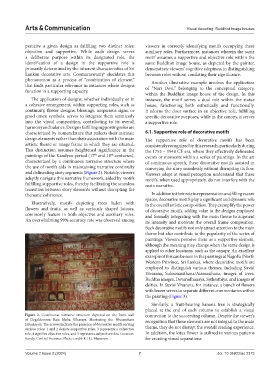
            Figure  2. Continuous narrative structure depicted on the front wall   connection to the succeeding column. Despite the viewer’s
            of Degaldoruwa Raja Maha Viharaya, illustrating the  Wessanthara   recognition that these elements are not integral to the main
            Jathakaya’s. The arrows indicate the presence of decorative motifs serving
            various roles: 1 and 2 denote supportive roles, 3 represents a subjective   theme, they do not disrupt the overall reading experience.
            role, 4 signifies objective roles, and 5 represents subjective roles. Location:   In addition, the lotus flower is utilized in various patterns
            Kandy, Central Province. Photo credit: K.H.J. Manaram.  for creating visual separations.


            Volume 2 Issue 2 (2024)                         7                                doi: 10.36922/ac.2373

