


Page 99 - AC-2-2
P. 99
Arts & Communication                                                Visual decoding: Buddhist image houses


                                                               However, addressing this challenging question has been
                                                               postponed, with reasons lacking conviction. This study
                                                               instead focuses on the period from 1753 to 1948 CE.
                                                                 It is an incontrovertible reality that traditional decorative
                                                               motifs have played a pivotal role in augmenting the esthetic
                                                               appeal of thematic painting spaces. The employment of
                                                               pictorial themes within Buddhist image houses exhibits
                                                               shared similarities across diverse Asian regions. Despite the
                                                               pictorial evidence in Buddhist paintings across centuries,
                                                               influenced by the economic, social, and religious contexts
                                                               as well as the patronage kingdoms in various Asian regions,
                                                               the  overarching  narrative  of  Buddhist  paintings  across
                                                               Asia encapsulates events and themes reflective of each
                                                               culture. Rooted in the interrelations and structural fabric
                                                               of Sri Lankan society, these motifs have evolved while
                                                               authentically  embodying  their  expressive  essence.  They
                                                               inspire viewers and invigorate the devotion of devotees,
                                                               possessing an intrinsic identity.
                                                                 The genesis of decorative motifs can be traced back
                                                               to the human inclination to observe and interpret their
                                                               surroundings through lines and shapes. Although the
                                                               original designs persist, they continue to evolve, giving
                                                               rise to diverse forms of decorative motifs. The academic
                                                               nature of decorative motifs is intricately intertwined
                                                               with architectural structure, sociocultural context, and
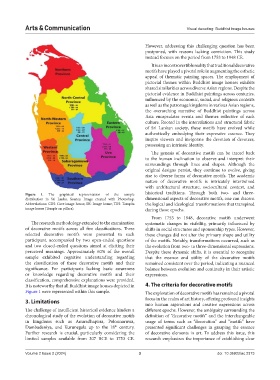
            Figure   1.  The  graphical  representation  of  the  sample  historical traditions. Through both two-  and three-
            distribution in Sri Lanka. Source: Image created with Photoshop.    dimensional aspects of decorative motifs, one can discern
            Abbreviations: CIH: Cave image house; IH: Image house; TIH: Tampita   the logical and ideological transformations that transpired
            image house (Temple on pillars).                   during those epochs.
                                                                 From 1753 to 1948, decorative motifs underwent
              The research methodology extended to the examination   systematic changes in visibility, primarily influenced by
            of decorative motifs across all five classifications. Three   shifts in social structures and sponsorship types. However,
            selected  decorative  motifs  were presented to  each   these changes did not alter the primary shape and utility
            participant,  accompanied  by  two  open-ended  questions   of the motifs. Notably, transformations occurred, such as
            and two closed-ended questions aimed at eliciting their   the evolution from two- to three-dimensional expressions.
            perceived meanings. Approximately 60% of the overall   Despite  these  dynamic  shifts,  it  is essential  to  recognize
            sample exhibited cognitive understanding regarding   that the essence and utility of the decorative motifs
            the  classification  of  these  decorative  motifs  and  their   remained consistent over the period, indicating a nuanced
            significance. For participants lacking basic awareness   balance between evolution and continuity in their artistic
            or knowledge regarding decorative motifs and their   expressions.
            classification, comprehensive explanations were provided.
            It is noteworthy that all Buddhist image houses depicted in   4. The criteria for decorative motifs
            Figure 1 were represented within this sample.      The exploration of decorative motifs has remained a pivotal
            3. Limitations                                     focus in the realm of art history, offering profound insights
                                                               into human aspirations and creative expressions across
            The challenge of insufficient historical evidence hinders a   different epochs. However, the ambiguity surrounding the
            chronological study of the evolution of decorative motifs   definition of “decorative motifs” and the interchangeable
            in kingdoms such as Anuradhapura, Polonnaruwa,     usage of terms such as “decoration” and “motifs” have
            Dambadeniya, and  Kurunegala  up  to  the  18   century.   presented significant challenges in grasping the essence
                                                  th
            Further research is crucial, particularly considering the   of decorative elements in art. To address this issue, this
            limited samples available from 307 BCE to 1753 CE.   research emphasizes the importance of establishing clear


            Volume 2 Issue 2 (2024)                         3                                doi: 10.36922/ac.2373

