


Page 104 - AC-2-2
P. 104
Arts & Communication                                                Visual decoding: Buddhist image houses


                                                               Kolaya, along with various types of flowers and fruit-
                                                               bearing trees. These motifs effectively manage surface
                                                               shapes and residual spaces left by the main wall paintings,
                                                               transcending the paintings in color, shape, and size.
                                                                 The  objective  role is  exemplified when  decorative
                                                               motifs carry any symbolic meaning. For instance, when the
                                                               Punkalasa is employed as a decorative motif, the viewer’s
                                                               visual perception extends beyond mere esthetics to cultural
                                                               symbolism. The Punkalasa and Dakshinavarti (blowable)
                                                               sankaya (right-hand conch) in this context are perceived
                                                               as cultural utilities, symbolizing auspiciousness, Buddhist
                                                               religious symbols (holy symbols), or serving as a positive
                                                               omen, particularly. It is noteworthy that decorative motifs
                                                               portraying the Eternal Tree and astrological symbols often
                                                               assume a significant visual presence, surpassing the scale
                                                               of motifs serving a supportive role. This prominence
                                                               underscores their heightened importance in the visual
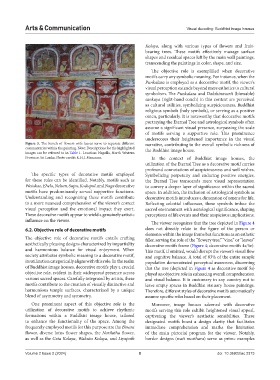
            Figure 3. The bunch of flowers with leaves serve to separate different   narrative, contributing to the overall symbolic richness of
            commentaries within the painting. Note: Descriptions for the highlighted   the Buddhist image house.
            images can be referred to in Table 1. Location: Nagolla, North Western
            Province, Sri Lanka. Photo credit: K.H.J. Manaram.   In  the  context  of  Buddhist  image  houses,  the
                                                               utilization of the Eternal Tree as a decorative motif carries
                                                               profound connotations of auspiciousness and well wishes.
              The specific types of decorative motifs employed   Symbolizing  perpetuity  and  enduring  positive  energies,
            for these roles can be identified. Notably, motifs such as   the Eternal Tree transcends mere visual representation
            Wetakae, Ehela, Nelum, Sapu, Kadupul, and Naga decorative   to convey a deeper layer of significance within the sacred
            motifs have predominantly served supportive functions.   space. In addition, the inclusion of astrological symbols as
            Understanding and recognizing these motifs contribute   decorative motifs introduces a dimension of omens for life.
            to a more nuanced comprehension of the viewer’s correct   Reflecting celestial influences, these symbols imbue the
            visual  perception  and  the  emotional  impact  they  exert.   sacred environment with astrological significance, shaping
            These decorative motifs appear to wield a genuinely artistic   perceptions of life events and their auspicious implications.
            influence on the viewer.                             The viewer recognizes that the tree depicted in Figure 4
            6.2. Objective role of decorative motifs           does not directly relate to the figure of the person or
                                                               elements within the image frame but functions as an esthetic
            The  objective  role  of  decorative  motifs  entails  crafting   filler, serving the role of the “flowery tree,” “vine,” or “leaves”
            aesthetically pleasing designs characterized by impartiality   decorative motifs frame (Figure 4; decorative motifs 4s/5e).
            and harmonious balance for visual enjoyment. When   This motif, if omitted, would disrupt the viewer’s visual flow
            society attributes symbolic meaning to a decorative motif,   and cognitive balance. A total of 83% of the entire sample
            its utilization categorically aligns with this role. In the realm   population demonstrated perceptual awareness, discerning
            of Buddhist image houses, decorative motifs play a crucial   that the tree (depicted in Figure 4 as decorative motif 5s)
            objective role, evident in their widespread presence across   played an objective role in enhancing overall comprehension
            various sacred spaces. Carefully integrated by artists, these   and visual balance. It is customary in any country not to
            motifs contribute to the creation of visually distinctive and   leave empty spaces in Buddhist statuary house paintings.
            harmonious temple surfaces, characterized by a unique   Therefore, different styles of decorative motifs automatically
            blend of asymmetry and symmetry.                   assume specific roles based on their placement.
              One prominent aspect of this objective role is the   Moreover, image houses adorned with decorative
            utilization of decorative motifs to achieve rhythmic   motifs serving this role exhibit heightened visual appeal,
            formations within  a  Buddhist image house, tailored   captivating  the  viewer’s  aesthetic  sensibilities.  These
            to enhance the functionality of the space. Among the   designated motifs boast a design clarity that facilitates
            frequently employed motifs for this purpose are the Binara   immediate comprehension and marks the limitation
            flower, diverse lotus flower shapes, the  Narilatha flower,   of the main pictorial program for the viewer. Notably,
            as well as the Geta Kolaya, Wakutu Kolaya, and Liyapath   border designs (wati mosthara) serve as prime examples


            Volume 2 Issue 2 (2024)                         8                                doi: 10.36922/ac.2373

