


Page 94 - AC-2-2
P. 94
Arts & Communication                                              75 years of Macedonian ballet (1949 – 2024)


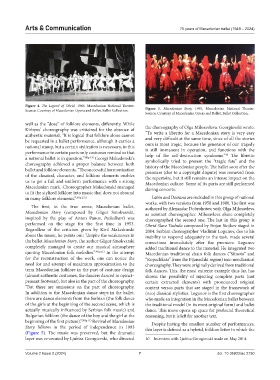
            Figure  4.  The Legend of Ohrid,  1966, Macedonian National Theatre.
            Source: Courtesy of Macedonian Opera and Ballet, Ballet Collection.  Figure  5. Macedonian Story,  1993, Macedonian National Theatre.
                                                               Source: Courtesy of Macedonian Opera and Ballet, Ballet Collection.
            well as the “dose” of folklore elements, differently. While
            Kirbyos’ choreography was criticized for the absence of   the choreography of Olga Milosavleva. Georgievski wrote:
            authentic material, “It is logical that folklore alone cannot   “To write a libretto for a Macedonian story is very easy
            be requested in a ballet performance, although it carries a   and very difficult at the same time, since of all the stories
            national stamp, but a certain stylization is necessary, in this   ours is most tragic, because the generator of our tragedy
            performance in certain parts only costumes remind us that   is  still  immanent  in  operation,  and functions  with  the
                                                                                                 10
            a national ballet is in question.” 28(p.13)  Georgi Makedonski’s   help of the self-destruction syndrome.”  The libretto
                                                               symbolically tried to present the “tragic fate” and the
            choreography achieved a proper balance between both   history of the Macedonian people. The ballet soon after the
            ballet and folklore elements. “The successful harmonization   premiere (due to a copyright dispute) was removed from
            of the classical, character, and folklore elements enables   the repertoire, but it still remains an intense impact on the
            us to get a full and uniform performance with a strong   Macedonian culture. Some of its parts are still performed
            Macedonian mark. Choreographer Makedonski managed   during concerts.
            to fit the stylized folklore into music that does not abound
            in many folklore elements.” 29(p.233)                Labin and Doirana are included in this group of national
                                                               works, with two versions from 1958 and 1980. The first was
              The first, in the true sense, Macedonian ballet,   authored by Alexandar Dobrohotov, with Olga Milosavleva
            Macedonian Story (composed by Gligor Smokvarski,   as assistant choreographer. Milosavleva alone completely
            inspired by the play of Anton Panov,  Pechalbari) was   choreographed the second one. The last in this group is
            performed on the stage for the first time in 1953.   Ohrid Slave Tashula composed by Stojan Stojkov staged in
            Regardless of the criticism given by Kiril Makedonski   2004. Serbian choreographer Vladimir Logunov, due to his
            about the music, he points out: “despite the weaknesses in   inability to respond adequately to the task, made several
            the ballet Macedonian Story, the author Gligor Smokvarski   corrections immediately after the premiere. Lagunov
            completely managed  to  create  our  musical  atmosphere   added traditional dance to the material. He integrated two
            quoting Macedonian folk melodies.” 30(p.11)  In the attempt   Macedonian traditional chain folk dances (“Sitnoto” and
            for the reconstruction of the work, one can notice the   “Kopachkata” from the Pijanechki region) into neoclassical
            need for and attempt of maximum approximation to the   choreography. They were originally derived from traditional
            term Macedonian folklore in the part of costume design   folk dances. This, the most extreme example thus far, has
            (almost authentic costumes, the dancers danced in opinci–  shown the possibility of injecting complete parts (not
            peasant footwear), but also in the part of the choreography.   certain  extracted  elements)  with  pronounced  original
            “But  there  are omissions on the  part  of  choreography.   content versus parts that are staged in the framework of
            In addition to the Macedonian dance steps in the ballet,   (neo) classical stylistics. Logunov is the first choreographer
            there are dance elements from the Serbian (the folk dance   who made an integration in the Macedonian ballet between
            of the girls at the beginning of the second scene, which is   the traditional model (in its most original form) and ballet
            actually musically influenced by Serbian folk music) and   dance. This move opens up space for profound theoretical
            Bulgarian folklore (the dance of the boy and the girl at the   reasoning, but it is left for another text.
            beginning of the first picture).” 30(p.11)  Revival of Macedonian   Despite having the smallest number of performances,
            Story follows in the period of independence in 1993   this layer is defined as a hybrid, folklore letter in which the
            (Figure  5).  The music  was  preserved, but  the  dramatic
            layer was re-created by Ljubisa Georgievski, who directed   10  Interview with Ljubisa Georgievski made on May 2014.


            Volume 2 Issue 2 (2024)                         7                                doi: 10.36922/ac.2730

