


Page 56 - AIH-1-2
P. 56
Artificial Intelligence in Health                                       AI in AD – Diagnosis and monitoring


                                                               A                     B


                                                               C
                                                                                      D


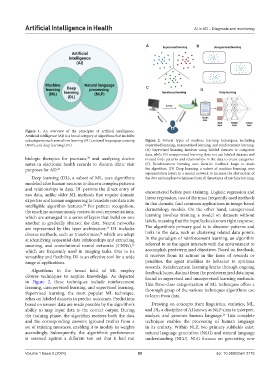
            Figure  1.  An overview of the principles of artificial intelligence.
            Artificial intelligence (AI) is a broad category of algorithms that includes
            subcategories such as machine learning (ML), natural language processing   Figure  2.  Several  types  of  machine  learning  techniques,  including
            (NLP), and deep learning (DL).                     supervised learning, unsupervised learning, and reinforcement learning.
                                                               (A) Supervised learning involves using labeled datasets to categorize
                                                               data, while (B) unsupervised learning does not use labeled datasets and
            biologic  therapies for psoriasis,  and analyzing doctor   instead finds patterns and relationships in the data to create categories.
                                      20
            notes  in electronic  health  records  to  discern  clinic  visit   (C) Reinforcement learning uses iterative feedback loops to teach
            purposes for AD. 21                                the algorithm. (D) Deep learning, a subset of machine learning, uses
                                                               representation layers in a neural network to increase the abstraction of
              Deep learning (DL), a subset of ML, uses algorithms   the data and employs techniques from all three types of machine learning.
            modeled after human neurons to discern complex patterns
            and relationships in data. DL permits the direct entry of   encountered before post-training. Logistic regression and
            raw data, unlike older ML methods that require domain   linear regression, two of the most frequently used methods
            expertise and human engineering to translate raw data into
            intelligible algorithm features.  For pattern recognition,   in this domain, find common applications in image-based
                                    22
            the machine autonomously creates its own representations,   dermatology models. On the other hand, unsupervised
            which are arranged in a series of layers that build on one   learning involves training a model on datasets without
            another to gradually abstract the data. Neural networks   labels, meaning that the input lacks a known right response.
            are represented by this layer architecture.  DL includes   The algorithm’s primary goal is to discover patterns and
                                              23
            diverse methods, such as transformers,  which are adept   links in the data, such as clustering related data points.
                                           24
            at identifying sequential data relationships and extracting   In the paradigm of reinforcement learning, an algorithm
            meaning, and convolutional neural networks (CNNs),    referred to as the agent interacts with the environment to
                                                         25
            which are frequently used in imaging tasks. Due to its   accomplish predetermined objectives. Based on feedback,
            versatility and flexibility, DL is an effective tool for a wide   it receives from its actions in the form of rewards or
            range of applications.                             penalties, the agent modifies its behavior to optimize
                                                               rewards. Reinforcement learning learns through ongoing
              Algorithms in the broad field of ML employ       feedback loops, distinct from the predetermined data input
            diverse techniques to acquire knowledge. As depicted   found in supervised and unsupervised learning methods.
            in  Figure  2, these techniques include reinforcement   This three-class categorization of ML techniques offers a
            learning, unsupervised learning, and supervised learning.   thorough grasp of the various techniques algorithms use
            Supervised learning, the most popular ML technique,   to learn from data.
            relies on labeled datasets to predict outcomes. Predictions
            based on unseen data are made possible by the algorithm’s   Drawing on concepts from linguistics, statistics, ML,
            ability to map input data to the correct output. During   and DL, a discipline of AI known as NLP aims to interpret,
            the training phase, the algorithm receives both the data   analyze, and generate human language.  This complete
                                                                                                26
            and the corresponding answers (ground truths) from a   technique enables the processing of human language
            set of training instances, enabling it to modify its weights   in its entirety. Within NLP, two primary subfields exist:
            accordingly. Subsequently, the algorithm’s performance   natural language generation (NLG) and natural language
            is assessed against a different test set that it had not   understanding (NLU). NLG focuses on generating new


            Volume 1 Issue 2 (2024)                         50                               doi: 10.36922/aih.2775

