


Page 59 - AIH-1-2
P. 59
Artificial Intelligence in Health                                       AI in AD – Diagnosis and monitoring


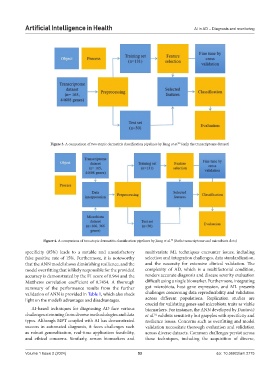
                       Figure 3. A comparison of two atopic dermatitis classification pipelines by Jiang et al.  (only the transcriptome dataset)
                                                                             50


                   Figure 4. A comparison of two atopic dermatitis classification pipelines by Jiang et al.  (Both transcriptome and microbiota data)
                                                                          50
            specificity (85%) leads to a notable and unsatisfactory   multivariate  ML  techniques  encounter  issues,  including
            false positive rate of 15%. Furthermore, it is noteworthy   selection and integration challenges, data standardization,
            that the ANN model shows diminishing resilience, and the   and the necessity for extensive clinical validation. The
            model over fitting that is likely responsible for the provided   complexity of AD, which is a multifactorial condition,
            accuracy is demonstrated by the F1 score of 0.964 and the   renders accurate diagnosis and disease severity evaluation
            Matthews correlation coefficient of 0.7454. A  thorough   difficult using a single biomarker. Furthermore, integrating
            summary  of  the  performance  results  from  the  further   gut microbiota, host gene expression, and ML presents
            validation of ANN is provided in Table 1, which also sheds   challenges concerning data reproducibility and validation
            light on the model’s advantages and disadvantages.  across different populations. Replication studies are
                                                               crucial for validating genes and microbiota traits as viable
              AI-based techniques  for diagnosing AD  face  various   biomarkers. For instance, the ANN developed by Dautović
            challenges stemming from diverse methodologies and data   et al.  exhibits sensitivity but grapples with specificity and
                                                                   51
            types. Although MPT coupled with AI has demonstrated   resilience issues. Concerns such as overfitting and model
            success in automated diagnosis, it faces challenges such   validation necessitate thorough evaluation and validation
            as  robust  generalization,  real-time  application  feasibility,   across diverse datasets. Common challenges persist across
            and  ethical  concerns.  Similarly, serum  biomarkers  and   these techniques, including the acquisition of diverse,


            Volume 1 Issue 2 (2024)                         53                               doi: 10.36922/aih.2775

