


Page 62 - AIH-1-2
P. 62
Artificial Intelligence in Health                                       AI in AD – Diagnosis and monitoring


                                                               actively researched to improve acoustic monitoring. These
                                                               techniques analyze sound data to detect movement and
                                                               quantify scratching activity. Despite the advantages of
                                                               acoustic recording over visual surveillance, it has only been
                                                               tested in a restricted capacity in the brief trial described
                                                               earlier. Therefore, more extensive and comprehensive
                                                               research is needed to confirm this strategy across a wider
                                                               range of patient demographics. 68

                                                               8. Smart devices
                                                               In the past 10 years, medical research has gained insights
                                                               into a range of medical conditions, and novel therapies have
                                                               been introduced subsequently, which include monitoring
                                                               dietary  intake  and sending reminders for  medication
                                                               adherence, facilitated by  the  portability and  processing
                                                               power of smart devices. 69,70  Researchers investigating
                                                               pruritus have modified wrist actigraphy for smartwatches
                                                               while maintaining its core principles and keeping up with
                                                               technological advancements. In a pilot study conducted
                                                                           71
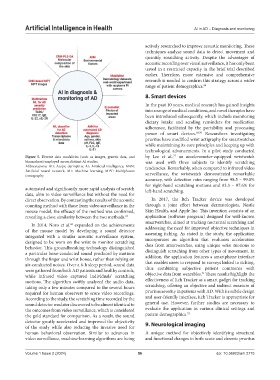
            Figure  5.  Diverse data modalities (such as images, genetic data, and   by Lee  et al.,  an accelerometer-equipped wristwatch
            biomarkers) employed across distinct AI studies.   was used with three subjects to identify scratching
            Abbreviations: AD: Atopic dermatitis; AI: Artificial intelligence; ANN:   tendencies. Remarkably, when compared to infrared video
            Artificial neural network; ML: Machine learning; MPT: Multiphoton
            tomography.                                        surveillance, the wristwatch demonstrated remarkable
                                                               accuracy, with detection rates ranging from 98.5 – 99.0%
                                                               for right-hand scratching motions and 93.3 – 97.6% for
            automated and significantly more rapid analysis of scratch   left-hand scratching.
            data, akin to video surveillance but without the need for
            direct observation. By contrasting the results of the acoustic   In 2017, the Itch Tracker device was developed
            counting method with those from video surveillance in the   through a joint effort between dermatologists, Nestle
            mouse model, the efficacy of the method was confirmed,   Skin Health, and Apple Inc. This invention consists of an
            revealing a close similarity between the two methods. 67  application (software program) designed for well-known
                                                               smartwatches, aimed at tracking nocturnal scratching and
                               68
              In 2014, Noro et al.  expanded on the achievements
            of  the  mouse model  by developing a  sound  detector   addressing the need for improved objective techniques in
                                                               assessing itching. As stated in the study, the application
            integrated with a similar acoustic surveillance system,   incorporates an algorithm that evaluates acceleration
            designed to be worn on the wrist to monitor scratching   data from smartwatches, using unique wrist motions to
            behavior. This groundbreaking technology distinguished
            a particular bone-conducted sound produced by motions   distinguish scratching from other types of movement. In
            through the finger and wrist bones, rather than relying on   addition, the application features a smartphone interface
            air-conducted noises. Over a 6-h sleep period, sound data   that enables users to respond to surveys linked to itching,
            were gathered from both AD patients and healthy controls,   thus combining subjective patient comments with
                                                                                       71
            while infrared video captured individuals’ scratching   objective data from wearables.  These results highlight the
            motions. The algorithm swiftly analyzed the audio data,   effectiveness of Itch Tracker as a smart gadget for tracking
            taking only a few minutes compared to the several hours   scratching, offering an objective and indirect measure of
            required for human observers to score video recordings.   pruritus severity in patients with AD. With its subtle design
            According to the study, the scratching time recorded by the   and user-friendly interface, Itch Tracker is appropriate for
            sound detector was later discovered to be almost identical to   general use. However, further studies are necessary to
            the outcomes from video surveillance, which is considered   evaluate the application in various clinical settings and
            the gold standard for comparison. As a result, the sound   patient demographics. 72
            detector greatly accelerated and improved the objectivity   9. Neurological imaging
            of the study while also reducing the invasive need for
            human behavioral observation. Similar to advances in   A unique method for objectively identifying structural
            video surveillance, machine-learning algorithms are being   and functional changes in both acute and chronic pruritus


            Volume 1 Issue 2 (2024)                         56                               doi: 10.36922/aih.2775

