


Page 89 - AIH-2-1
P. 89
Artificial Intelligence in Health                          Benchmarking ML imputation in mental health surveys


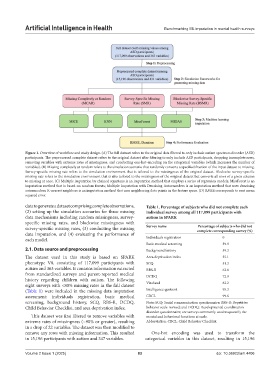
            Figure 1. Overview of workflow and study design. (A) The full dataset refers to the original data filtered to only include autism spectrum disorder (ASD)
            participants. The preprocessed complete dataset refers to the original dataset after filtering to only include ASD participants, dropping incomplete rows,
            removing variables with extreme rates of missingness, and conducting one-hot-encoding on the categorical variables (which increases the number of
            variables). (B) Missing completely at random refers to the simulation scenario that randomly converts a specified fraction of the input dataset to missing.
            Survey-specific missing rate refers to the simulation environment that is tailored to the missingness of the original dataset. Blockwise survey-specific
            missing rate refers to the simulation environment that is also tailored to the missingness of the original dataset but converts all rows of a given column
            to missing at once. (C) Multiple imputation by chained equations is an imputation method that employs a series of regression models; MissForest is an
            imputation method that is based on random forests; Multiple Imputation with Denoising Autoencoders is an imputation method that uses denoising
            autoencoders; K-nearest neighbors is an imputation method that uses neighboring data points in the feature space. (D) RMSE corresponds to root mean
            squared error.

            data to generate a dataset comprising complete observations,   Table 1. Percentage of subjects who did not complete each
            (2) setting up the simulation scenarios for three missing   individual survey among all 117,099 participants with
            data mechanisms including random missingness, survey-  autism in SPARK
            specific missing rates, and blockwise missingness with
                                                                                     Percentage of subjects who did not
            survey-specific missing rates, (3) conducting the missing   Survey name  complete corresponding survey (%)
            data imputation, and (4) evaluating the performance of
            each model.                                        Individuals registration         0
                                                               Basic medical screening          39.9
            2.1. Data source and preprocessing                 Background history               59.3

            The dataset used  in this study is  based on SPARK   Area deprivation index         35.1
            phenotype  V8, consisting of 117,099 participants with   SCQ                        51.3
            autism and 363 variables. It contains information extracted   RBS-R                 63.8
            from standardized surveys and parent-reported medical   DCDQ                        72.9
            history regarding children with autism. The following
            eight surveys with <80% missing rates in the full dataset   Vineland                82.2
            (Table 1) were included in the missing data imputation   Intelligence quotient      95.3
            assessment: individuals registration, basic medical   CBCL                          99.6
            screening,  background  history,  SCQ,  RBS-R,  DCDQ,   Note: SCQ: Social communication questionnaire; RBS-R: Repetitive
            Child Behavior Checklist, and area deprivation index.  behavior scale-revised; and DCDQ: Developmental coordination
                                                               disorder questionnaire; are surveys commonly used to quantify the
              This dataset was first filtered to remove variables with   mental and behavioral functions at scale.
            extreme rates of missingness (~90% or greater), resulting   Abbreviation: CBCL: Child Behavior Checklist.
            in a drop of 22 variables. The dataset was then modified to
            remove any rows with missing information. This resulted   One-hot encoding was used to transform the
            in 15,196 participants with autism and 347 variables.  categorical variables in this dataset, resulting in 15,196


            Volume 2 Issue 1 (2025)                         83                               doi: 10.36922/aih.4406

