


Page 10 - AIH-2-2
P. 10
Artificial Intelligence in Health                                Role of LLMs in improving patient experience


            Table 1. Inclusion and exclusion criteria
            Criteria                     Inclusion criteria                       Exclusion criteria
            Study type    Prospective studies, cross-sectional studies, and systematic   Studies focusing on non-LLM AI models or other machine
                          reviews that discuss the applications of LLMs in patient   learning techniques unrelated to patient experience.
                          satisfaction, communication, or experience.  Studies employing LLMs solely for generating manuscripts or
                                                                   text without any commentary on patient outcomes.
            Date range    Articles published between January 2015 and June 2024.  Articles published before January 2015
            Language      Articles published in English.           Articles published in languages other than English
            Study focus   Research discussing LLMs applied in healthcare settings,   Studies focusing on administrative tasks without discussing the
                          enhancing communication, education, or experience.  patient-facing impact or satisfaction.
            Outcome measures  Studies evaluating outcomes such as patient satisfaction,   Studies lacking specific outcome measures related to patient
                          communication improvement, or operational efficiency.  experience or satisfaction.
            Comparator    Studies comparing LLM interventions with traditional   Studies with no comparator group or irrelevant comparisons.
                          methods (e.g., human communication or standard protocols).
            Abbreviations: LLM: Large language model; AI: Artificial intelligence.

                              Thailand, 1  Italy, 1            through accurate or faster diagnosis or through superior
                   Netherlands, 1  Japan, 1                    patient communication channels) or indirect means (e.g.,
             Singapore, 1
                  Israel, 1                                    through improved operational efficiency resulting in
                   Canada, 1                                   reduced waiting times). Both are of value, although the
                Saudi Arabia,                                  significance to the patient is more evident in the former. In
                    2
                                                               general, the following areas were examined:
                  China, 3                                     •   Answering patient queries: Given the readily prompted
                                                     USA, 24      patient-facing interface of ChatGPT, the immediate
                Germany, 4
                                                                  interest was in the possibility of training LLMs to
                                                                  address  a  patient’s  specific  health-related  questions
                      India, 4                                    in a broad or specific context. Eight articles have
                                                                  investigated this, ranging from questions on general
                                                                       23
                             UK, 3                                health  to specific areas such as cirrhosis and
                                                                  hepatocellular carcinoma,  total hip arthroplasty,
                                                                                                            24
                                                                                        25
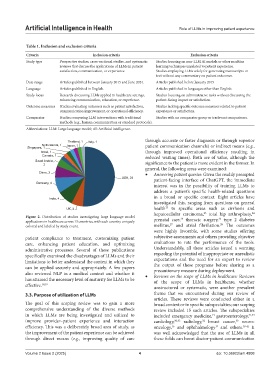
            Figure  2. Distribution of studies investigating large language model   29        26
            applications in healthcare across 13 countries, with each country uniquely   prenatal care,  thoracic surgery,  type  2 diabetes
                                                                                               28
                                                                         27
            colored and labeled by study count.                   mellitus,  and atrial fibrillation.  The outcomes
                                                                  were highly favorable, with some studies offering
            patient compliance to treatment, customizing patient   subjective assessments and others providing objective
            care, enhancing patient education, and optimizing     evaluations to rate the performance of the tools.
            administrative  processes.  Several  of  these  publications   Understandably, all these articles issued a warning
            specifically examined the disadvantages of LLMs and their   regarding the potential of inappropriate or unrealistic
            limitations to better understand the context in which they   expectations and the need for an expert to review
                                                                  the  output  of these  programs  before  sharing  as  a
            can be applied securely and appropriately. A few papers   precautionary measure during deployment.
            also reviewed NLP in a medical context and whether it   •   Reviews on the scope of LLMs in healthcare: Reviews
            has attained the necessary level of maturity for LLMs to be   of the scope of LLMs in healthcare, whether
            effective. 18,19                                      unstructured or systematic, were another prevalent

            3.3. Purpose of utilization of LLMs                   theme that we encountered during our review of
                                                                  articles.  These  reviews  were  conducted  either  in  a
            The goal of this scoping review was to gain a more    broad context or in specific subspecialties; our scoping
            comprehensive understanding of the diverse methods    review  included  15 such  articles.  The subspecialties
            in which LLMs are being investigated and utilized to   included emergency medicine,  gastroenterology, 31,34
                                                                                           19
            improve provider–patient experience and interaction   cardiology, 30,35  radiology,  breast cancer,  neuro-
                                                                                                     33
                                                                                       32
            efficiency. This was a deliberately broad area of study, as   oncology,  and ophthalmology  and others. 38-41  It
                                                                                             37
                                                                          36
            the improvement of the patient experience can be achieved   was  well  acknowledged  that  the  use  of  LLMs  in  all
            through  direct  means  (e.g.,  improving  quality  of  care   these fields can boost doctor-patient communication
            Volume 2 Issue 2 (2025)                         4                                doi: 10.36922/aih.4808

