


Page 49 - AIH-2-2
P. 49
Artificial Intelligence in Health                                     Health workforces’ algorithmic literacy


                                                               3.1.3. ICT Technical expertise

                                                               •   What is the organization’s ICT technical expertise?
                                                                  Are there gaps?
                                                               •   Is there a framework for evaluating AI technologies
                                                                  for possible adoption?
                                                               3.1.4. ATE

                                                               •   What is the organization’s ATE? What is missing?
                                                               •   What is the organization’s approach to data
                                                                  management? What about hallucination management,
                                                                  which is the model, trained on appropriate data?

                                                               3.1.5. Faculty and student engagement
                                                               •   Are there opportunities within the organization for
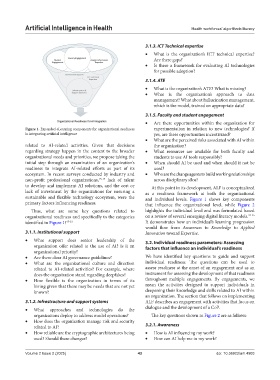
            Figure 1. Expanded eLearning components for organizational readiness   experimentation in relation to new technologies? If
            in integrating artificial intelligence                yes, are these opportunities incentivized?
                                                               •   What are the perceived risks associated with AI within
            related to AI-related activities. Given that decisions   the organization?
            regarding strategy happen in the context to the broader   •   What resources are available for both faculty and
            organizational needs and priorities, we propose taking the   students to use AI tools responsibly?
            initial step through an examination of an organization’s   •   When should AI be used and when should it not be
            readiness to integrate AI-related efforts as part of its   used?
            ecosystem. In recent surveys conducted by industry and   •   Who are the change agents to build working relationships
            non-profit professional organizations, 15-17  lack of talent   across disciplinary silos?
            to develop and implement AI solutions, and the cost or   At this point in its development, ALF is conceptualized
            lack  of  investment  by  the organizations  for  ensuring a   as a readiness framework at both the organizational
            sustainable and flexible technology ecosystem, were the   and individual  levels.  Figure  1 shows key components
            primary factors influencing readiness.             that influence the organizational level, while  Figure  2
              Thus, what are some key questions related to     highlights the individual level and was formulated based
            organizational readiness and specifically to the categories   on a review of several emerging digital literacy models. 22-25
            identified in Figure 1? 17-21                      It demonstrates how an individual’s learning progression
                                                               would flow from  Awareness to  Knowledge to  Applied
            3.1.1. Institutional support                       Innovation toward Expertise.
            •   What support does senior leadership of the     3.2. Individual readiness parameters: Assessing
               organization offer related to the use of AI? Is it an   factors that influence an individual’s readiness
               organizational priority?
            •   Are there clear AI governance guidelines?      We have identified key questions to guide and support
            •   What are the organizational culture and direction   individual  readiness.  The  questions  can  be  used  to
               related to AI-related  activities?  For  example,  where   assess readiness at the onset of an engagement and as an
               does the organization stand regarding deepfakes?  instrument for assessing the development of that readiness
            •   How flexible is the organization in terms of its   throughout  multiple  engagements.  By  engagements,  we
               hiring given that there may be needs that are not yet   mean the activities designed to support individuals in
               known?                                          deepening their knowledge and skills related to AI within
                                                               an organization. The section that follows on implementing
            3.1.2. Infrastructure and support systems          ALF describes an engagement with activities that focus on
            •   What  approaches  and  technologies  do  the   dialogue and the development of a CoP.
               organizations deploy to address model operations?  The key questions shown in Figure 2 are as follows:
            •   How does the organization manage risk and security
               related to AI?                                  3.2.1. Awareness
            •   How reliable are the cryptographic architectures being   •   How is AI influencing my work?
               used? Should these changes?                     •   How can AI help me in my work?


            Volume 2 Issue 2 (2025)                         43                               doi: 10.36922/aih.4903

