


Page 50 - AIH-2-2
P. 50
Artificial Intelligence in Health                                     Health workforces’ algorithmic literacy


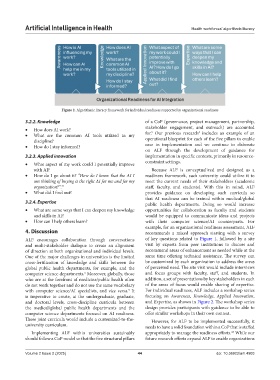
                           Figure 2. Algorithmic literacy framework for individual readiness supported by organizational readiness


            3.2.2. Knowledge                                   of a CoP (governance, project management, partnership,
            •   How does AI work?                              stakeholder engagement, and outreach) are accounted
                                                                                      5
                                                                 5
            •   What are the common AI tools utilized in my    for.  Our previous research  includes an example of an
               discipline?                                     operational blueprint for each of the five pillars to enable
            •   How do I stay informed?                        ease in implementation and we continue to elaborate
                                                               on ALF through the development of guidance for
            3.2.3. Applied innovation                          implementation in specific contexts, primarily in resource-
            •   What aspect of my work could I potentially improve   constraint settings.
               with AI?                                          Because ALF is conceptualized and designed as a
            •   How do I go about it? “How do I know that the AI I   readiness framework, each university could utilize it to
               am thinking of buying is the right AI for me and for my   meet the current needs of their stakeholders (academic
               organization?”. 21                              staff, faculty, and students). With this in mind, ALF
            •   What did I find out?                           provides guidance  on developing  such  curricula  so
                                                               that AI readiness can be trained within medical/global
            3.2.4. Expertise                                   public health departments. Doing so would increase
            •   What are some ways that I can deepen my knowledge   opportunities for collaboration as faculty and students
               and skills in AI?                               would be equipped to communicate ideas and projects
            •   How can I help others learn?                   with their computer science/AI counterparts. For
                                                               example, for an organizational readiness assessment, ALF
            4. Discussion                                      recommends a mixed approach starting with a survey
            ALF encourages collaboration through conversations   of key questions related to  Figure  1, followed by a site
            and multi-stakeholder  dialogue  to create  an  alignment   visit by experts from peer institutions to discuss and
            of direction at both organizational and individual levels.   recommend areas of enhancement as needed while at the
            One of the major challenges in universities is the limited   same time offering technical assistance. The survey can
            cross-fertilization of knowledge and skills between the   be customized by each organization to address the areas
            global public  health departments, for example, and the   of perceived need. The site visit would include interviews
            computer science departments.  Moreover, globally, those   and focus groups with faculty, staff, and students. In
                                     5
            who are at the forefront of medicine/public health often   addition, a set of presentations by key stakeholders in each
            do not work together and do not use the same vocabulary   of the areas of focus would enable sharing of expertise.
            with computer science/AI specialists, and  vice versa.   It   For individual readiness, ALF includes a workshop series
                                                        5
            is imperative to create, at the undergraduate, graduate,   focusing on  Awareness,  Knowledge,  Applied Innovation,
            and doctoral levels, cross-discipline curricula between   and Expertise, as shown in Figure 2. The workshop series
            the medical/global public health departments and the   design provides participants with guidance to be able to
            computer science departments focused on AI readiness.   offer similar workshops in their own context.
            These joint curricula would include a customized-to-the-  However,  for  ALF  to  be  implemented  successfully,  it
            university curriculum.                             needs to have a solid foundation within a CoP that is staffed
              Implementing  ALF  within  universities  sustainably   appropriately to manage the readiness efforts.  While our
                                                                                                   25
            should follow a CoP model so that the five structural pillars   future research efforts expand ALF to enable organizations

            Volume 2 Issue 2 (2025)                         44                               doi: 10.36922/aih.4903

