


Page 96 - AIH-2-2
P. 96
Artificial Intelligence in Health                                         Cirrhosis prediction in hepatitis C


            A


            B


            C


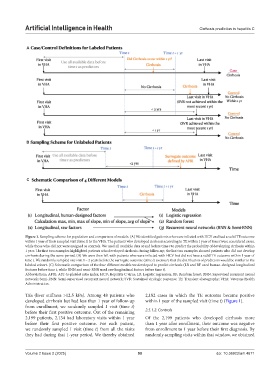
            Figure 1. Sampling scheme for population and comparison of models. (A) We identified patients who were infected with HCV and had a valid TE outcome
            within 1 year of their sampled visit (time t) to the VHA. The patients who developed cirrhosis according to TE within 1 year of time t were considered cases,
            while those who did not were assigned as controls. We used all available data at and before time t to predict the probability of developing cirrhosis within
            1 year. The first two examples highlighted patients who developed cirrhosis during follow-up; the last two examples showed patients who did not develop
            cirrhosis during the same period. (B) We were then left with patients who were infected with HCV but did not have a valid TE outcome within 1 year of
            time t. We randomly sampled one visit 1 – 2 years before the surrogate outcome (time t) to ensure that the distribution of predictors would be similar to the
            labeled cohort. (C) Schematic comparison of the four different models we developed to predict cirrhosis (LR and RF used human-designed longitudinal
            features before time t, while RNN and semi-RNN used raw longitudinal factors before time t).
            Abbreviations: APRI: AST-to-platelet ratio index; HCV: Hepatitis C virus; LR: Logistic regression; RF: Random forest; RNN: Supervised recurrent neural
            network; Semi-RNN: Semi-supervised recurrent neural network; SVR: Sustained virologic response; TE: Transient elastography; VHA: Veterans Health
            Administration.

            TEs (liver stiffness >12.5 kPa). Among 48  patients who   2,182  cases in which the TE outcome became positive
            developed cirrhosis but had less than 1 year of follow-up   within 1 year of the sampled visit (time t) (Figure 1).
            from enrollment, we randomly sampled 1 visit (time  t)
            before their first positive outcome. Out of the remaining   2.5.1.2. Controls
            2,199  patients, 2,134 had laboratory visits within 1  year   Of the 2,199  patients who developed cirrhosis more
            before their first positive outcome. For each patient,   than 1 year after enrollment, their outcome was negative
            we randomly sampled 1 visit (time t) from all the visits   from enrollment to 1 year before their first diagnosis. By
            they had during that 1-year period. We thereby obtained   randomly sampling visits within that window, we obtained


            Volume 2 Issue 2 (2025)                         90                               doi: 10.36922/aih.4671

