


Page 101 - AIH-2-2
P. 101
Artificial Intelligence in Health                                         Cirrhosis prediction in hepatitis C


            A                                 B                               C


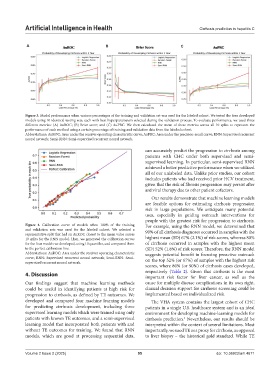
            Figure 3. Model performance when various percentages of the training and validation set was used for the labeled cohort. We tested the four developed
            models using 10 identical testing sets, each with best hyperparameters selected during the validation process. To evaluate performance, we used three
            different metrics: (A) AuROC; (B) Brier score; and (C) AuPRC. We then calculated the mean of these metrics across all 10 splits to represent the
            performance of each method using a certain percentage of training and validation data from the labeled cohort.
            Abbreviations: AuROC: Area under the receiver operating characteristic curve; AuPRC: Area under the precision-recall curve; RNN: Supervised recurrent
            neural network; Semi-RNN: Semi-supervised recurrent neural network.

                                                               can accurately predict the progression to cirrhosis among
                                                               patients with CHC under both supervised and semi-
                                                               supervised learning. In particular, semi-supervised RNN
                                                               achieved a better predictive performance when we utilized
                                                               all of our unlabeled data. Unlike prior studies, our cohort
                                                               includes patients who had received prior HCV treatment,
                                                               given that the risk of fibrosis progression may persist after
                                                               antiviral therapy due to other patient cofactors.
                                                                 Our results demonstrate that machine learning models
                                                               are feasible options for estimating cirrhosis progression
                                                               risk in large populations. We anticipate many potential
                                                               uses, especially in guiding outreach interventions for
                                                               people with the greatest risk for progression to cirrhosis.
            Figure  4.  Calibration  curve  of  models  when  100%  of  the  training   For example, using the RNN model, we determined that
            and validation sets  was used  for the labeled cohort.  We selected a   90% of all cirrhosis diagnoses occurred in samples with the
            representative split that had an AuROC closest to the mean value across
            10 splits for the RNN model. Then, we generated the calibration curves   highest mean (SD) 67% (2.1%) of risk scores, whereas 80%
            for the four models we developed, using 10 quantiles, and compared them   of cirrhosis occurred in samples with the highest mean
            to the perfect calibration line.                   (SD) 52% (1.8%) of risk scores. Therefore, the RNN model
            Abbreviations: AuROC: Area under the receiver operating characteristic   suggests potential benefit in focusing proactive outreach
            curve;  RNN:  Supervised  recurrent  neural  network;  Semi-RNN:  Semi-  on the top 52% (or 67%) of samples with the highest risk
            supervised recurrent neural network.
                                                               scores, where 80% (or 90%) of cirrhosis cases developed,
                                                               respectively (Table 2). Given that cirrhosis is the most
            4. Discussion                                      important risk factor for liver cancer, as well as the
            Our  findings  suggest  that  machine learning  methods   cause for multiple disease complications in its own right,
            could be useful in identifying patients at high risk for   clinical decision support for cirrhosis screening could be
            progression to cirrhosis, as defined by TE outcomes. We   implemented based on individualized risk.
            developed and compared four machine learning models   The VHA system contains the largest cohort of CHC
            for predicting cirrhosis development, including three   patients in a single U.S. healthcare system and is an ideal
            supervised learning models which were trained using only   environment for developing machine-learning models for
            patients with known TE outcomes, and a semi-supervised   cirrhosis prediction.  Nevertheless, our results should be
                                                                               3
            learning model that incorporated both patients with and   interpreted within the context of several limitations. Most
            without TE outcomes for training. We found that RNN   importantly, we used TE as a proxy for cirrhosis, as opposed
            models, which are good at processing sequential data,   to  liver  biopsy  –  the  historical  gold  standard.  While  TE


            Volume 2 Issue 2 (2025)                         95                               doi: 10.36922/aih.4671

