


Page 102 - AIH-2-2
P. 102
Artificial Intelligence in Health                                         Cirrhosis prediction in hepatitis C


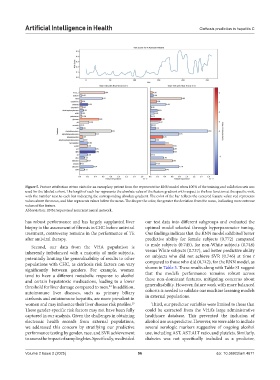
            Figure 5. Feature attribution at two visits for an exemplary patient from the representative RNN model when 100% of the training and validation sets was
            used for the labeled cohort. The length of each bar represents the absolute value of the feature gradient with respect to the loss function at the specific visit,
            with the number next to each bar indicating the corresponding absolute gradient. The color of the bar reflects the centered feature value: red represents
            values above the mean, and blue represents values below the mean. The deeper the color, the greater the deviation from the mean, indicating more extreme
            values of the feature.
            Abbreviation: RNN: Supervised recurrent neural network.

            has robust performance and has largely supplanted liver   our test data into different subgroups and evaluated the
            biopsy in the assessment of fibrosis in CHC before antiviral   optimal model selected through hyperparameter tuning.
            treatment, controversy remains in the performance of TE   Our findings indicate that the RNN model exhibited better
            after antiviral therapy.                           predictive ability for female subjects (0.772) compared
              Second, our data from the VHA population is      to male subjects (0.745), for non-White subjects (0.748)
            inherently  imbalanced  with  a  majority  of  male  subjects,   versus White subjects (0.737), and better predictive ability
            potentially limiting the generalizability of results to other   on subjects who did not achieve SVR (0.746) at time  t
            populations with CHC, as cirrhosis risk factors can vary   compared to those who did (0.742), for the RNN model, as
            significantly  between  genders.  For  example,  women   shown in Table 3. These results along with Table S1 suggest
            tend to have a different metabolic response to alcohol   that the model’s performance remains robust across
            and certain hepatotoxic medications, leading to a lower   these non-dominant features, mitigating concerns about
            threshold for liver damage compared to men.  In addition,   generalizability. However, future work with more balanced
                                               24
            autoimmune liver diseases, such as primary biliary   cohorts is needed to validate our machine learning models
            cirrhosis and autoimmune hepatitis, are more prevalent in   in external populations.
            women and may influence their liver disease risk profiles.    Third, our predictor variables were limited to those that
                                                         25
            These gender-specific risk factors may not have been fully   could be extracted from the VHA’s large administrative
            captured in our analysis. Given the challenges in obtaining   healthcare database. This prevented the inclusion of
            electronic health records from external populations,   alcohol use as a predictor. However, we were able to include
            we addressed this concern by stratifying our predictive   several serologic markers suggestive of ongoing alcohol
            performance testing by gender, race, and SVR achievement   use, including AST, AST:ALT ratio, and platelets. Similarly,
            to assess the impact of sampling bias. Specifically, we divided   diabetes was not specifically included as a predictor,


            Volume 2 Issue 2 (2025)                         96                               doi: 10.36922/aih.4671

