


Page 103 - AIH-2-2
P. 103
Artificial Intelligence in Health                                         Cirrhosis prediction in hepatitis C


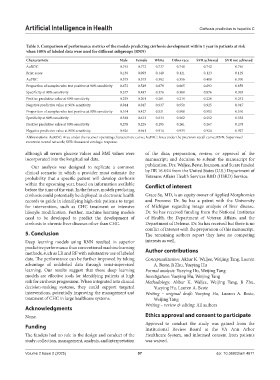
            Table 3. Comparison of performance metrics of the models predicting cirrhosis development within 1 year in patients at risk
            when 100% of labeled data were used for different subgroups (RNN)
            Characteristic                          Male   Female  White  Other race  SVR achieved  SVR not achieved
            AuROC                                   0.745   0.772  0.737    0.748       0.742        0.746
            Brier score                             0.130   0.093  0.140    0.121       0.123        0.129
            AuPRC                                   0.373   0.373  0.392    0.356       0.409        0.370
            Proportion of samples who test positive at 90% sensitivity  0.672  0.549  0.678  0.665  0.693  0.659
            Specificity at 90% sensitivity          0.377   0.487  0.376    0.380       0.876        0.393
            Positive predictive value at 90% sensitivity  0.239  0.201  0.261  0.219    0.220        0.242
            Negative predictive value at 90% sensitivity  0.944  0.947  0.937  0.950    0.925        0.947
            Proportion of samples who test positive at 80% sensitivity  0.514  0.427  0.531  0.500  0.503  0.510
            Specificity at 80% sensitivity          0.548   0.613  0.534    0.562       0.552        0.552
            Positive predictive value at 80% sensitivity  0.278  0.225  0.295  0.261    0.267        0.278
            Negative predictive value at 80% sensitivity  0.926  0.941  0.914  0.935    0.924        0.927
            Abbreviations: AuROC: Area under the receiver operating characteristic curve; AuPRC: Area under the precision-recall curve; RNN: Supervised
            recurrent neural network; SVR: Sustained virologic response.

            although all serum glucose values and BMI values were   of the data; preparation, review, or approval of the
            incorporated into the longitudinal data.           manuscript; and decision to submit the manuscript for

              Our analysis was designed to replicate a common   publication. Drs. Waljee, Beste, Ioannou, and Su are funded
            clinical scenario in which a provider must estimate the   by IIR 16-024 from the United States (U.S.) Department of
            probability that a specific patient will develop cirrhosis   Veterans Affairs Health Services R&D (HSRD) Service.
            within the upcoming year, based on information available   Conflict of interest
            before the time of the visit. In the future, models predicting
            cirrhosis could potentially be deployed in electronic health   Grace Su, MD, is an equity owner of Applied Morphomics
            records to guide in identifying high-risk patients to target   and Prenovo. Dr.  Su has a patent with the University
            for intervention, such as CHC treatment or intensive   of Michigan regarding image analysis of liver disease.
            lifestyle modification. Further, machine learning models   Dr. Su has received funding from the National Institutes
            need to be developed to predict the development of   of Health, the Department of Veteran Affairs, and the
            cirrhosis in chronic liver diseases other than CHC.  Department of Defense. Dr. Su has received but there is no
                                                               conflict of interest with the preparation of this manuscript.
            5. Conclusion                                      The remaining authors report they have no competing
            Deep learning models using RNN resulted in superior   interests as well.
            predictive performance than conventional machine learning
            methods, such as LR and RF with substantive use of labeled   Author contributions
            data. The performance can be further improved by taking   Conceptualization: Akbar K. Waljee, Weijing Tang, Lauren
            advantage  of  unlabeled  data  through  semi-supervised   A. Beste, Ji Zhu, Yueying Hu
            learning. Our results suggest that these deep learning   Formal analysis: Yueying Hu, Weijing Tang
            models are effective tools for identifying patients at high   Investigation: Yueying Hu, Weijing Tang
            risk for cirrhosis progression. When integrated into clinical   Methodology:  Akbar K. Waljee, Weijing Tang, Ji Zhu,
            decision-making systems, they could support targeted   Yueying Hu, Lauren A. Beste
            interventions, potentially improving the management and   Writing – original  draft:  Yueying  Hu,  Lauren  A.  Beste,
            treatment of CHC in large healthcare systems.         Weijing Tang
                                                               Writing – review & editing: All authors
            Acknowledgments
            None.                                              Ethics approval and consent to participate

            Funding                                            Approval to conduct the study was gained from the
                                                               Institutional Review Board at the VA Ann Arbor
            The funders had no role in the design and conduct of the   Healthcare System, and informed consent from patients
            study; collection, management, analysis, and interpretation   was waived.

            Volume 2 Issue 2 (2025)                         97                               doi: 10.36922/aih.4671

