


Page 164 - AIH-2-3
P. 164
Artificial Intelligence in Health                                   EI and AI among healthcare professionals


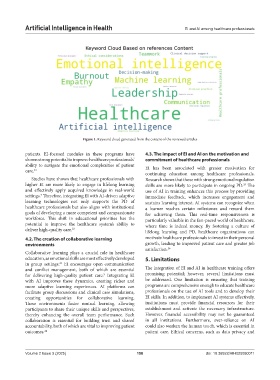
                                    Figure 1. Keyword cloud generated from the content of the reviewed articles


            patients. EI-focused modules in these programs have   4.3. The impact of EI and AI on the motivation and
            shown strong potential to improve healthcare professionals’   commitment of healthcare professionals
            ability to navigate the emotional complexities of patient   EI  has  been  associated  with  greater  motivation  for
            care. 21
                                                               continuing education among healthcare professionals.
              Studies have shown that healthcare professionals with   Research shows that those with strong emotional regulation
            higher EI are more likely to engage in lifelong learning   skills are more likely to participate in ongoing PD.  The
                                                                                                         25
            and effectively apply acquired knowledge in real-world   use of AI in training enhances this process by providing
            settings.  Therefore, integrating EI with AI-driven adaptive   immediate feedback, which increases engagement and
                  9
            learning  technologies  not  only  supports  the  PD  of   sustains learning interest. AI systems can recognize when
            healthcare professionals but also aligns with institutional   a learner reaches certain milestones and reward them
            goals of developing a more competent and compassionate   for achieving them. This real-time responsiveness is
            workforce. This shift in educational priorities has the   particularly valuable in the fast-paced world of healthcare,
            potential to improve the healthcare system’s ability to   where time is indeed money. By fostering a culture of
            deliver high-quality care. 22                      lifelong learning and PD, healthcare organizations can

            4.2. The creation of collaborative learning        motivate healthcare professionals to invest in their personal
            environments                                       growth, leading to improved patient care and greater job
                                                               satisfaction. 26
            Collaborative learning plays a crucial role in healthcare
            education, as emotional skills are most effectively developed   5. Limitations
            in group settings.  EI encourages  open communication
                          23
            and conflict management, both of which are essential   The integration of EI and AI in healthcare training offers
            for delivering high-quality patient care.  Integrating EI   promising potential; however, several limitations must
                                             5
            with AI improves these dynamics, creating richer and   be addressed. One limitation is ensuring that training
            more adaptive learning experiences. AI platforms can   programs are comprehensive enough to educate healthcare
            facilitate group discussions and clinical case simulations,   professionals on the use of AI tools and to develop their
            creating opportunities for collaborative learning.   EI skills. In addition, to implement AI systems effectively,
            These  environments  foster  mutual  learning,  allowing   institutions must provide financial resources for their
            participants to share their unique skills and perspectives,   establishment and activate the necessary infrastructure.
            thereby enhancing the overall team performance. Such   However,  financial  accessibility  may not  be guaranteed
            collaboration is essential for building trust and shared   in all institutions. Furthermore, over-reliance on AI
            accountability, both of which are vital to improving patient   could also weaken the human touch, which is essential in
            outcomes. 24                                       patient care. Ethical concerns, such as data privacy and


            Volume 2 Issue 3 (2025)                        158                           doi: 10.36922/AIH025080011

