


Page 223 - AJWEP-22-5
P. 223
Rheological properties of coal gangue slurry

                              A                                  B


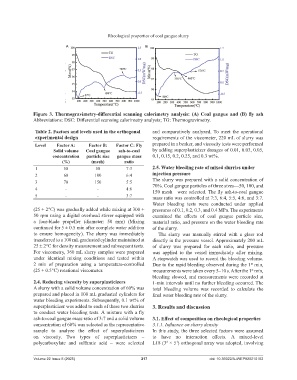
                Figure  3. Thermogravimetry‑differential  scanning  calorimetry  analysis:  (A)  Coal  gangue  and  (B)  fly  ash
                Abbreviations: DSC: Differential scanning calorimetry analysis; TG: Thermogravimetry.

                 Table 2. Factors and levels used in the orthogonal   and  comparatively  analyzed.  To  meet  the  operational
                 experimental design                                requirements of the viscometer, 220 mL of slurry was
                 Level    Factor A:     Factor B:   Factor C: Fly   prepared in a beaker, and viscosity tests were performed
                         Solid volume   Coal gangue   ash‑to‑coal   by adding superplasticizer dosages of 0.01, 0.03, 0.05,
                        concentration   particle size   gangue mass   0.1, 0.15, 0.2, 0.25, and 0.3 wt%.
                            (%)          (mesh)         ratio
                 1           50            50            7:3        2.5. Water bleeding rate of mixed slurries under
                 2           60            100           6:4        injection pressure
                 3           70            150           5:5        The slurry was prepared with a solid concentration of
                 4            -             -            4:6        70%. Coal gangue particles of three sizes—50, 100, and
                                                                    150 mesh—were selected. The fly ash-to-coal gangue
                 5            -             -            3:7        mass ratio was controlled at 7:3, 6:4, 5:5, 4:6, and 3:7.
                                                                    Water  bleeding  tests  were  conducted  under  applied
                (25 ± 2°C) was gradually added while mixing at 300 ±   pressures of 0.1, 0.2, 0.3, and 0.4 MPa. The experiments
                50 rpm using a digital overhead stirrer equipped with   examined  the  effects  of  coal  gangue  particle  size,
                a  four-blade  propeller  (diameter:  50  mm)  (Mixing   material ratio, and pressure on the water bleeding rate
                continued for 5 ± 0.5 min after complete water addition   of the slurry.
                to  ensure  homogeneity ). The  slurry  was  immediately   The  slurry  was  manually  stirred  with  a  glass  rod
                transferred to a 100 mL graduated cylinder maintained at   directly in the pressure vessel. Approximately 200 mL
                25 ± 2°C for density measurement and subsequent tests.   of  slurry  was  prepared  for  each  ratio,  and  pressure
                For viscometry, 360 mL slurry samples were prepared   was  applied  to  the  vessel  immediately  after  mixing.
                under  identical  mixing  conditions  and  tested  within   A stopwatch was used to record the bleeding volume.
                2  min  of  preparation  using  a  temperature-controlled   Due to the rapid bleeding observed during the 1  min,
                                                                                                               st
                (25 ± 0.5°C) rotational viscometer.                 measurements were taken every 5–10 s. After the 1  min,
                                                                                                                st
                                                                    bleeding slowed, and measurements were recorded at
                2.4. Reducing viscosity by superplasticizers        1-min intervals until no further bleeding occurred. The
                A slurry with a solid volume concentration of 60% was   total  bleeding  volume  was  recorded  to  calculate  the
                prepared and placed in 100 mL graduated cylinders for   final water bleeding rate of the slurry.
                water bleeding experiments. Subsequently, 0.1 wt% of
                superplasticizer was added to each of these two slurries   3. Results and discussion
                to conduct water bleeding tests. A mixture with a fly
                ash-to-coal gangue mass ratio of 3:7 and a solid volume   3.1. Effect of composition on rheological properties
                concentration of 60% was selected as the representative   3.1.1. Influence on slurry density
                sample  to  analyze  the  effect  of  superplasticizers   In this study, the three selected factors were assumed
                on  viscosity.  Two  types  of  superplasticizers  –   to  have  no  interaction  effects.  A  mixed-level
                polycarboxylate  and  sulfamic  acid  –  were  selected   L18 (3  × 5 ) orthogonal array was adopted, involving
                                                                               1
                                                                          2

                Volume 22 Issue 5 (2025)                       217                           doi: 10.36922/AJWEP025210162

