


Page 75 - AJWEP-22-5
P. 75
Hybrid optimization for LSTM DO prediction

                                                                    the performance bottlenecks typically faced by a single
                                                                    optimization  algorithm.  Experimental  results  also
                                                                    confirm that this approach achieves faster convergence
                                                                    speed  and higher  solution  quality  compared  across
                                                                    multiple  benchmark  function  tests,  demonstrating
                                                                    its  practical  effectiveness  for  solving  complex,  high-
                                                                    dimensional optimization problems.

                                                                    3.3. Process and characteristics of the hybrid
                                                                    algorithm
                                                                    In high-dimensional complex optimization problems, a
                                                                    single optimization strategy often presents a trade-off
                                                                    between search ability and convergence efficiency. Local
                                                                    gradient optimization methods (such as Nadam) offer
                                                                    rapid convergence but are prone to becoming trapped in

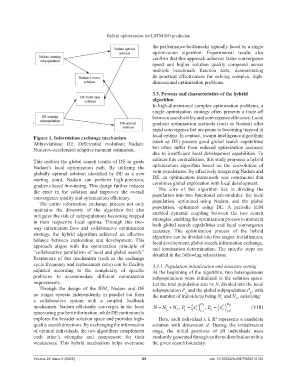
                Figure 1. Information exchange mechanism            local optima. In contrast, swarm intelligence algorithms
                Abbreviations:  DE:  Differential  evolution;  Nadam:   (such  as  DE)  possess  good  global  search  capabilities
                Nesterov-accelerated adaptive moment estimation.    but  often  suffer  from  reduced  optimization  accuracy
                                                                    due  to  insufficient  local  development  capabilities.  To
                This enables the global search results of DE to guide   address this contradiction, this study proposes a hybrid
                Nadam’s  local  optimization  path.  By  utilizing  the   optimization  algorithm  based  on  the  coevolution  of
                globally  optimal  solution  identified  by  DE  as  a  new   twin populations. By effectively integrating Nadam and
                starting  point, Nadam  can  perform  high-precision,   DE,  an  optimization  framework  was  constructed  that
                gradient-based fine-tuning. This design further reduces   combines global exploration with local development.
                the  error  in  the  solution  and  improves  the  overall   The core of this algorithm  lies in dividing the
                convergence quality and optimization efficiency.    population into two functional sub-modules: the local
                  The  entire  information  exchange  process  not  only   population,  optimized  using  Nadam,  and  the  global
                maintains  the  diversity  of  the  algorithm  but  also   population,  optimized  using  DE.  A  periodic  IEM
                                                                    enabled  dynamic  coupling  between  the  two  search
                mitigates the risk of subpopulations becoming trapped
                in  their  respective  local  optima.  Through  this  two-  strategies, enabling the optimization process to maintain
                way  information  flow  and  collaborative  optimization   both global search capabilities and local convergence
                                                                    accuracy.  The  optimization  process  of  the  hybrid
                strategy,  the  hybrid  algorithm  achieved  an  effective   algorithm can be divided into five stages: initialization,
                balance  between  exploration  and  development.  This   local development, global search, information exchange,
                approach  aligns  with  the  optimization  principle  of   and  termination  determination. The  specific  steps  are
                “collaborative parallelism of local and global search.”   detailed in the following subsections.
                Parameters of this mechanism (such as the exchange
                cycle frequency and replacement ratio) can be flexibly   3.3.1. Population initialization and structure setting
                adjusted  according  to  the  complexity  of  specific   At the beginning of the algorithm, two heterogeneous
                problems  to  accommodate  different  optimization   subpopulations  were  initialized  in  the  solution  space.
                requirements.                                       Let the total population size be N, divided into the local
                  Through the  design of the  IEM, Nadam  and DE    subpopulation P  and the global subpopulation P , with
                                                                                   L
                                                                                                               G
                no  longer  operate  independently  in  parallel  but  form   the number of individuals being N  and N , satisfying:
                a  collaborative  system  with  a  coupled  feedback                              L      G
                mechanism.  Nadam  efficiently  converges  in  the  local   N  N  N ,  P  ,  P   N G    (VIII)
                                                                                       L
                                                                                      x
                                                                                                  x
                                                                                         N L
                                                                                                   G
                                                                                             G
                                                                                       i
                                                                                  L
                                                                                                   j
                                                                          L
                                                                               G
                space using gradient information, while DE continuously                  i1         j1
                explores the broader solution space and provides high-  Here, each individual x ∈ R  represents a candidate
                                                                                                d
                quality search directions. By exchanging the information   solution with dimension  d.  During  the  initialization
                of optimal individuals, the two algorithms complement   stage, the initial  positions of all  individuals  were
                each other’s strengths and compensate  for their    randomly generated through uniform distribution within
                weaknesses.  This  hybrid  mechanism  helps  overcome   the given search boundary:
                Volume 22 Issue 5 (2025)                        69                           doi: 10.36922/AJWEP025210165

