


Page 78 - AN-2-4
P. 78
Advanced Neurology                                                    Sexual behavior and multiple sclerosis


            Table 2. Outcome of diagnosis with multiple sclerosis (G35) between (a) adults engaging in all forms of high‑risk sexual behavior
            versus adults not engaging in high‑risk sexual behavior; (b) males engaging in high‑risk homosexual and/or bisexual behavior
            versus males engaging in high‑risk heterosexual behavior; (c) females engaging in high‑risk homosexual and/or bisexual
            behavior versus females engaging in high‑risk heterosexual behavior; cohorts are matched for age, race, and ethnicity
            Cohort                      N       Patients with outcome   Risk    Risk ratio  Odds ratio   P‑value
                                                 of multiple sclerosis                      (95% CI)
            High-risk sexual behavior versus absence of high-risk sexual behavior
             Adults engaging in high-risk   220,969    742           0.336%       0.959      0.959      0.4103
             sexual behavior                                                    (0.867, 1.060)  (0.867, 1.060)
             Adults not engaging in high-risk   220,969  774         0.350%
             sexual behavior
            Male same-sex high-risk behavior versus male opposite-sex high-risk behavior
             Males engaging in same-sex   12,593       53            0.428%       2.789      2.797     <0.0001
             high-risk behavior                                                 (1.653, 4.708)  (1.655, 4.727)
             Males engaging in opposite-sex   12,593   19            0.153%
             high-risk behavior
            Female same-sex high-risk behavior versus female opposite-sex high-risk behavior
             Females engaging in same-sex   7,128      116           1.627%       2.275      2.296     <0.0001
             high-risk behavior                                                 (1.639, 3.156)  (1.649, 3.196)
             Females engaging in       7,128           51            0.715%
             opposite-sex high-risk behavior
            Abbreviation: EBV: Epstein–Barr virus.

            A                  B             C                 may be hindering the development of adequate treatment
                                                               and identification strategies for this patient population
                                                               already known to be at risk for negative health outcomes
                                                               due to societal and health-care inequalities [8-10] .
                                                                 Our findings may be useful for a range of providers
                                                               interested in comprehensive patient care, not only those
                                                               who focus on the LGBTQ+ population. Patients present
                                                               for care  with a wide  variety  of concerns,  and  sexual
                                                               health is an important aspect of overall wellness . The
                                                                                                        [4]
                                                               strong association noted in our study could help identify
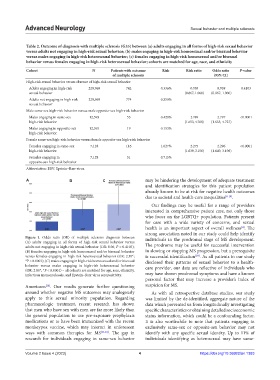
            Figure  1. Odds ratio (OR) of multiple sclerosis diagnosis between   individuals in the prodromal stage of MS development.
            (A)  adults  engaging  in  all  forms  of  high-risk  sexual  behavior  versus
            adults not engaging in high-risk sexual behavior (OR: 0.96; P = 0.4103);   The prodrome may be useful for successful intervention
            (B) females engaging in high-risk homosexual and/or bisexual behavior   in slowing or stopping MS progression, but a prerequisite
                                                                                    [18]
            versus females engaging in high-risk heterosexual behavior (OR: 2.30*;   is successful identification . As all patients in our study
            *P < 0.0001); (C) males engaging in high-risk homosexual and/or bisexual   disclosed their patterns of sexual behavior to a health-
            behavior versus males engaging in high-risk heterosexual behavior   care provider, our data are reflective of individuals who
            (OR: 2.80*; *P < 0.0001) – all cohorts are matched for age, race, ethnicity,
            infectious mononucleosis, and Epstein–Barr virus seropositivity.  may have shown prodromal symptoms and have a known
                                                               personal factor that may increase a provider’s index of
            Americans . Our results generate further questioning   suspicion for MS.
                    [13]
            around whether negative MS outcomes may analogously   As with all retrospective database studies, our study
            apply to this sexual minority population. Regarding   was limited by the de-identified, aggregate nature of the
            pharmacologic treatment, recent research has shown   data which prevented us from longitudinally investigating
            that men who have sex with men are far more likely than   specific characteristics or obtaining detailed socioeconomic
            the general population to use pre-exposure prophylaxis   status information, which could be a confounding factor.
            medications or to have been immunized with the recent   It is also worthwhile to note that patients engaging in
            monkeypox vaccine, which may interact in unforeseen   exclusively same-sex or opposite-sex behavior may not
            ways  with  common  therapies  for  MS [11,12] .  The  gap  in   identify with any specific sexual identity. Up to 11% of
            research for individuals engaging in same-sex behavior   individuals identifying as heterosexual may have same-


            Volume 2 Issue 4 (2023)                         4                         https://doi.org/10.36922/an.1383

