


Page 83 - AN-2-4
P. 83
Advanced Neurology                                                 NPRL2 as possible actor in reflex seizures


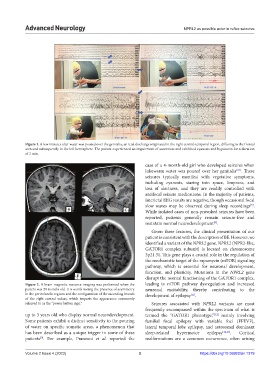
            Figure 1. A few minutes after water was poured over the genitalia, an ictal discharge originated in the right central-temporal region, diffusing to the frontal
            area and subsequently to the left hemisphere. The patient experienced an impairment of awareness and exhibited cyanosis and hypotonia for a duration
            of 1 min.

                                                               case of a 4-month-old girl who developed seizures when
                                                               lukewarm water was poured over her genitalia . These
                                                                                                      [10]
                                                               seizures typically manifest with vegetative symptoms,
                                                               including cyanosis, staring into space, limpness, and
                                                               loss of alertness, and they are readily controlled with
                                                               antifocal seizure medications. In the majority of patients,
                                                               interictal EEG results are negative, though occasional focal
                                                               slow waves may be observed during sleep recordings .
                                                                                                           [9]
                                                               While isolated cases of non-provoked seizures have been
                                                               reported, patients generally remain seizure-free and
                                                               maintain normal neurodevelopment .
                                                                                            [9]
                                                                 Given  these  features,  the  clinical  presentation  of  our
                                                               patient is consistent with the description of BE. However, we
                                                               identified a variant of the NPRL2 gene. NPRL2 (NPR2-like,
                                                               GATOR1 complex subunit) is located on chromosome
                                                               3p21.31. This gene plays a crucial role in the regulation of
                                                               the mechanistic target of the rapamycin (mTOR) signaling
                                                               pathway,  which  is essential  for neuronal development,
                                                               function, and plasticity. Mutations in the  NPRL2 gene
                                                               disrupt the normal functioning of the GATOR1 complex,
            Figure 2. A brain magnetic resource imaging was performed when the   leading to mTOR pathway dysregulation and increased
            patient was 20 months old. It is worth noting the presence of asymmetry   neuronal excitability, thereby contributing to the
            in the perirolandic regions and the configuration of the ascending branch   development of epilepsy .
                                                                                  [11]
            of the right central  sulcus, which imparts the appearance commonly
            referred to as the “power button sign.”              Seizures associated with  NPRL2 variants are most
                                                               frequently encompassed within the spectrum of what is
            up to 3 years old who display normal neurodevelopment.   termed the “GATOR1 phenotype,”  mainly involving
                                                                                            [12]
            Some patients exhibit a distinct sensitivity to the pouring   familial focal epilepsy with variable foci (FFEVF),
            of  water  on specific  somatic  areas,  a  phenomenon  that   lateral temporal lobe epilepsy, and  autosomal  dominant
            has been described as a unique trigger in some of these   sleep-related  hypermotor  epilepsy [12,13] .  Cortical
            patients . For example, Franzoni  et al. reported the   malformations are a common occurrence, often arising
                  [9]

            Volume 2 Issue 4 (2023)                         3                         https://doi.org/10.36922/an.1379

