


Page 56 - AN-3-3
P. 56
Advanced Neurology                                                     HS-proteoglycans and brain function


                         A                                 C


                         B                                 D


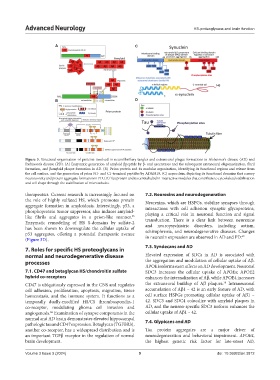
            Figure 3. Structural organization of proteins involved in neurofibrillary tangles and extraneural plaque formations in Alzheimer’s disease (AD) and
            Parkinson’s disease (PD). (A) Enzymatic generation of amyloid βpeptide by β- and γsecretases and the subsequent extraneural oligomerization, fibril
            formation, and βamyloid plaque formation in AD. (B)  Prion protein and its modular organization, identifying its functional regions and release from
            the cell surface, and the generation of prion N1- and C1-terminal peptides by ADAM10. (C) αsynuclein, depicting its functional domains that convey
            neurotoxicity and protein aggregate formation in PD. (D) Tau protein and its central tubulin-interactive modules that contribute to cytoskeletal stabilization
            and cell shape through the stabilization of microtubules.

            therapeutics. Current research is increasingly focused on   7.2. Neurexins and neurodegeneration
            the role of highly sulfated HS, which promotes protein   Neurexins, which are HSPGs, stabilize synapses through
            aggregate formation in  amyloidosis.  Interestingly, p53,  a   interactions with cell adhesion synaptic glycoproteins,
            phosphoprotein tumor suppressor, also induces amyloid-  playing a critical role in neuronal function and signal
                                                         55
            like fibrils and aggregates in a prion-like manner.    transduction. There is a clear link between neurexins
            Enzymatic remodeling of HS S-domains by sulfate-2   and neuropsychiatric disorders, including autism,
            has been shown to downregulate the cellular uptake of   schizophrenia, and neurodegenerative diseases. Changes
            p53 aggregates, offering a potential therapeutic avenue   in neurexin expression are observed in AD and PD. 69
            (Figure 3D).
                                                               7.3. Syndecans and AD
            7. Roles for specific HS proteoglycans in
            normal and neurodegenerative disease               Elevated expression  of SDCs in  AD  is  associated with
            processes                                          the aggregation and modulation of cellular uptake of Aβ.
                                                               APOE isoforms exert effects on AD development. Neuronal
            7.1. CD47 and betaglycan HS/chondroitin sulfate    SDC3 increases the cellular uptake of APOEs; APOE2
            hybrid co-receptors                                enhances the internalization of Aβ, while APOE4 increases
                                                                                                70
            CD47 is ubiquitously expressed in the CNS and regulates   the extraneural buildup of Aβ plaques.  Intraneuronal
            cell adhesion, proliferation, apoptosis, migration, tissue   accumulation of Aβ1 – 42 is an early feature of AD, with
            homeostasis, and the immune system. It functions as a   cell  surface  HSPGs  promoting  cellular  uptake  of  Aβ1  –
            temporally  dually-modified  HS/CS  thrombospondin-1   42. SDC3 and SDC4 colocalize with amyloid plaques in
            co-receptor, modulating glioma cell invasion and   AD, and the neuron-specific SDC3 isoform enhances the
                      68
            angiogenesis.  Examination of synapse components in the   cellular uptake of Aβ1 – 42.
            normal and AD brain demonstrates elevated hippocampal   7.4. Glypicans and AD
            pathologic tau and CD47 expression. Betaglycan (TGFBR3),
            another co-receptor, has a widespread distribution and is   Tau protein aggregates are a major driver of
            an important TGFβ receptor in the regulation of normal   neurodegeneration and behavioral impairment.  APOE4,
            brain development.                                 the highest genetic risk factor for late-onset AD,

            Volume 3 Issue 3 (2024)                         9                                doi: 10.36922/an.3812

