


Page 51 - AN-3-3
P. 51
Advanced Neurology                                                     HS-proteoglycans and brain function


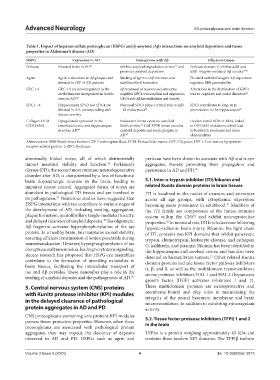
            Table 1. Impact of heparan sulfate proteoglycan (HSPG) and β-amyloid (Aβ) interactions on amyloid deposition and tissue
            properties in Alzheimer’s disease (AD)
            HSPG                Expression in AD           Interactions with Aβ           Effects on tissues
            Perlecan      Elevated levels in AD 56  Inhibits amyloid degradation in vitro  and   Perlecan domain V inhibits α2β1 and
                                                                            57
                                                    promotes amyloid deposition   α5β1 integrin-mediated Aβ toxicity 58-61
            Agrin         Agrin is abundant in Aβ plaques and   Binding of agrin to Aβ increases and   Elevated endothelial agrin Aβ deposition
                          elevated in CSF of AD patients  stabilizes fibril formation  regulates BBB permeability
            GPC 1-6       GPC 1-6 are downregulated in the   Aβ treatment of neurons and astrocytes   Alterations in the distribution of GPC4
                          cerebellum but upregulated in limbic   amplifies GPC1 transcription and sulphation;   lead to cognitive and social disorders 63
                          areas in AD. 62           GPC4 aids Aβ internalization and toxicity
            SDC1 – 4      Hippocampus SDC3 and SDC4 are   Neuronal SDC3 plays a critical role in Aβ1   SDC3 contributes to long-term
                          elevated in AD, corresponding with   – 42 endocytosis 64  potentiation in the hippocampus 65
                          disease severity
            Collagen XVIII   Upregulated expression in the   Endostatin forms cytotoxic amyloid   Dysfunctional ECM in AD is linked
            (COL18A1)     entorhinal cortex and hippocampus   fibrils in vitro;  Coll XVIII forms vascular   to COL18A1 mutations, which lead
                                                             66
                          in severe AD 40           amyloid deposits and senile plaques in   to Knobloch syndrome and brain
                                                    AD. 67                        abnormalities
            Abbreviations: BBB: Blood–brain barrier; CSF: Cerebrospinal fluid; ECM: Extracellular matrix; GPC: Glypican; LRP-1: Low-density lipoprotein
            receptor-related protein-1; SDC: Syndecan.

            abnormally folded  α-syn, all of which detrimentally   perlecan have been shown to associate with Aβ and α-syn
            impact neuronal viability and function.  Parkinson’s   aggregates, thereby promoting their propagation and
                                               19
            disease (PD), the second most common neurodegenerative   persistence in AD and PD. 30
            disorder after AD, is characterized by a loss of functional
            brain dopaminergic neurons in the brain, leading to   5.1. Inter-α-trypsin inhibitor (ITI)/bikunin and
            impaired motor control. Aggregated forms of  α-syn are   related Kunitz domain proteins in brain tissues
            abundant in pathological PD tissues and are involved in   ITI is localized in the nuclei of neurons and astrocytes
            its pathogenesis.  Numerous studies have suggested that   across all age groups, with cytoplasmic expression
                         27
            HSPG interactions with tau contribute to various stages of   becoming more prominent in adulthood.  Members of
                                                                                                 31
            the  development  of AD, including  seeding, aggregation,   the ITI family are components of the innate immune
            plaque formation, neurofibrillary tangle-mediated toxicity,   system within the CNS  and exhibit neuroprotective
                                                                                   31
            and delayed clearance of amyloid deposits.  The oligomeric   properties.  In neonatal rats, ITI levels decrease following
                                             28
                                                                        32
            Aβ fragment activates  hyperphosphorylation of the tau   hypoxic-ischemic  brain injury.  Bikunin, the  light chain
            protein. In a healthy brain, tau maintains axonal stability,   of ITI, contains two KPI domains that inhibit pancreatic
            ensuring efficient transmission of action potentials during   trypsin, chymotrypsin, leukocyte elastase, and cathepsin
            neurotransduction. However, hyperphosphorylation of tau   G, kallikrein, and plasmin. Bikunin has been identified in
            disrupts axonal transmission, leading to cytotoxic signaling.   the hippocampus and cerebral cortex and has also been
            Recent research has proposed that HSPG-tau assemblies   detected in human brain tumors.  Other related Kunitz
                                                                                          33
            contribute  to  the  formation  of  tunneling  nanotubes  in   domain proteins include tissue factor pathway inhibitors
            brain tissues, facilitating  the intercellular  transport  of   α, β, and δ, as well as the multidomain transmembrane
            tau and Aβ peptides. These nanotubes play a role in the   serine protease inhibitors HAI-1 and HAI-2 (hepatocyte
            seeding of amyloid deposits and the pathogenesis of AD. 29
                                                               growth factor [HGF] activator inhibitors 1 and 2).
            5. Central nervous system (CNS) proteins           These multidomain proteins are neuroprotective and
            with Kunitz protease inhibitor (KPI) modules       membrane-bound and play roles in maintaining the
                                                               integrity of the neural basement membrane and brain
            in the delayed clearance of pathological           microvasculature, in addition to exhibiting anticoagulant
            protein aggregates in AD and PD                    activity.
            CNS proteoglycans containing core proteins KPI modules   5.2. Tissue factor protease inhibitors (TFPI) 1 and 2
            possess tissue-protective properties. However, when these   in the brain
            proteoglycans are associated with pathological protein
            aggregates, they may impede the clearance of deposits   TFPIα  is a  protein  weighing  approximately  43  kDa  and
            observed  in  AD  and  PD.  HSPGs  such  as  agrin  and   contains three tandem KPI domains. The TFPIβ isoform


            Volume 3 Issue 3 (2024)                         4                                doi: 10.36922/an.3812

