


Page 18 - ARNM-2-1
P. 18
Advances in Radiotherapy
            & Nuclear Medicine                                                 Blood glucose and I-123 MIBG lung uptake


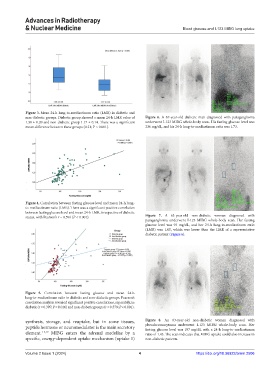
            Figure 3. Mean 24-h lung-to-mediastinum ratio (LMR) in diabetic and
            non-diabetic groups. Diabetic group showed a mean 24-h LMR value of   Figure  6.  A  67-year-old diabetic man diagnosed with paraganglioma
            1.38 ± 0.20 and non-diabetic group 1.17 ± 0.14. There was a significant   underwent I-123 MIBG whole-body scan. His fasting glucose level was
            mean difference between these groups (0.21; P < 0.001).  236 mg/dL, and his 24-h lung-to-mediastinum ratio was 1.73.


            Figure 4. Correlation between fasting glucose level and mean 24-h lung-
            to-mediastinum ratio (LMR). There was a significant positive correlation
            between fasting glucose level and mean 24-h LMR, irrespective of diabetic
            status, with Pearson’s r = 0.596 (P < 0.001).      Figure  7.  A  63-year-old non-diabetic woman diagnosed with
                                                               paraganglioma underwent I-123 MIBG whole-body scan. Her fasting
                                                               glucose level was 93  mg/dL, and her 24-h lung-to-mediastinum ratio
                                                               (LMR)  was  1.05,  which  was  lower  than  the  LMR  of  a  representative
                                                               diabetic patient (Figure 6).


            Figure  5.  Correlation between fasting glucose and mean 24-h
            lung-to-mediastinum ratio in diabetic and non-diabetic groups. Pearson’s
            correlation analysis revealed significant positive correlations, separately, in
            diabetic (r = 0.397; P = 0.016) and non-diabetic groups (r = 0.579; P < 0.001).


            synthesis, storage, and reuptake, but in some tissues,   Figure  8. An 83-year-old non-diabetic woman diagnosed with
            peptide hormone or neuromodulator is the main secretory   pheochromocytoma underwent I-123 MIBG whole-body scan. Her
                                                               fasting glucose level was 107 mg/dL with a 24-h lung-to-mediastinum
            element. 1-3,19  MIBG enters the adrenal medullae by a   ratio of 1.43. The scan indicates that MIBG uptake could also increase in
            specific, energy-dependent uptake mechanism (uptake 1)   non-diabetic patients.


            Volume 2 Issue 1 (2024)                         4                       https://doi.org/10.36922/arnm.2506

