


Page 19 - ARNM-2-1
P. 19
Advances in Radiotherapy
            & Nuclear Medicine                                                 Blood glucose and I-123 MIBG lung uptake


                                                               prediabetic status and having suffered early CAN would
                                                               contribute to the increased lung uptake of MIBG observed
                                                               in non-diabetic patients.
                                                                 This study failed to analyze the correlation of the
                                                               increased MIBG uptake in the lung with the effect of
                                                               pulmonary cells irradiation. However, this study unveiled
                                                               a significant positive correlation with large association
                                                               strength between glucose level and lung uptake of MIBG,
                                                               regardless of the diabetic status (r = 0.596; P < 0.001). Thus,
                                                               a prospective study is warranted to further investigate this
                                                               correlation.
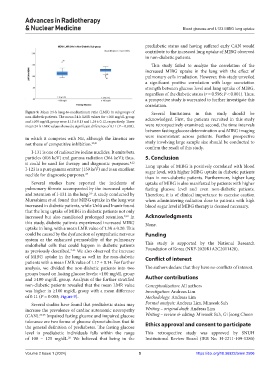
            Figure 9. Mean 24-h lung-to-mediastinum ratio (LMR) in subgroups of   Several limitations in this study should be
            non-diabetic patients. The mean 24-h LMR values for <100 mg/dL group   acknowledged. First, the patients recruited in this study
            and ≥100 mg/dL group were 1.13 ± 0.13 and 1.24 ± 0.12, respectively. These
            mean 24-h LMR values showed a significant difference of 0.11 (P = 0.003).  were retrospectively examined; second, the time intervals
                                                               between fasting glucose determination and MIBG imaging
            in which it competes with NE, although the kinetics are   were inconsistent across patients. Further prospective
            not those of competitive inhibition. 20,21         study involving large sample size should be conducted to
                                                               confirm the result of this study.
              I-131 is one of radioactive iodine nuclides. It emits beta
            particles (606 keV) and gamma radiation (364 keV); thus,   5. Conclusion
            it could be used for therapy and diagnostic purposes.    Lung uptake of MIBG is positively correlated with blood
                                                        4,22
            I-123 is a pure gamma emitter (159 keV) and is an excellent   sugar level, with higher MIBG uptake in diabetic patients
            nuclide for diagnostic purposes. 23
                                                               than in  non-diabetic patients. Furthermore,  higher lung
              Several studies have reported the incidents of   uptake of MIBG is also manifested by patients with higher
            pulmonary fibrosis accompanied by the increased uptake   fasting glucose level and even non-diabetic patients.
            and retention of I-131 in the lung.  A study conducted by   Therefore, it is of clinical importance to exercise caution
                                       5,6
            Murashima et al. found that MIBG uptake in the lung was   when administering radiation dose to patients with high
            increased in diabetic patients, while Unlü and Inanir found   blood sugar level if MIBG therapy is deemed necessary.
            that the lung uptake of MIBG in diabetic patients not only
            increased  but  also  manifested  prolonged  retention.   In   Acknowledgments
                                                      9,10
            this study, diabetic patients experienced increased MIBG   None.
            uptake in lung, with a mean LMR value of 1.38 ± 0.20. This
            could be caused by the dysfunction of sympathetic nervous   Funding
            system or the enhanced permeability of the pulmonary
            endothelial cells that could happen in diabetic patients   This study is supported by the National Research
            as previously described. 7-11  We also observed the increase   Foundation of Korea (NRF-2020R1A2C2011428).
            of MIBG uptake in the lung as well in the non-diabetic   Conflict of interest
            patients with a mean LMR value of 1.17 ± 0.14. For further
            analysis, we divided the non-diabetic patients into two   The authors declare that they have no conflicts of interest.
            groups based on fasting glucose levels: <100 mg/dL group
            and ≥100 mg/dL group. Analysis of the further stratified   Author contributions
            non-diabetic patients revealed that the mean LMR value   Conceptualization: All authors
            was higher in ≥100 mg/dL group with a mean difference   Investigation: Andreas Lim
            of 0.11 (P = 0.003; Figure 9).                     Methodology: Andreas Lim
              Several studies have found that prediabetic status may   Formal analysis: Andreas Lim, Minseok Suh
            increase the prevalence of cardiac autonomic neuropathy   Writing – original draft: Andreas Lim
            (CAN). 24,25  Impaired fasting glucose and impaired glucose   Writing – review & editing: Minseok Suh, Gi Jeong Cheon
            tolerance are two forms of glucose dysmetabolism that fit   Ethics approval and consent to participate
            the general definition of prediabetes. The fasting glucose
            level in prediabetic individuals falls within the range   This retrospective study was approved by SNUH
            of 100 – 125  mg/dL.  We believed that being in the   Institutional Review Board (IRB No. H-2211-109-1380)
                              26

            Volume 2 Issue 1 (2024)                         5                       https://doi.org/10.36922/arnm.2506

